Basic overview
When you visit a doctor, clinic or hospital in the U.S., you have certain rights, responsibilities and protections.
- You can ask for an interpreter at no cost.
- Your health information is private and cannot be shared without your permission.
- You have the right to be treated with respect and to feel safe.
- It is okay to ask questions if you do not understand something about your care, treatment or bills. Doctors and staff encourage and expect this.
Tip: Bring your health insurance card or health plan (or other proof of health coverage) if you have it. Bring a list of your medications and allergies to share with your doctor and be prepared to pay your copay at the visit.
Where to get care
Federally Qualified Health Centers (FQHCs)
FQHCs provide low or no-cost healthcare to people without insurance of with limited income. They serve everyone, regardless of which language you speak or your ability to pay. They also offer discount programs based on your income. Service may include:
- Medical care (including vaccines)
- Dental services
- Behavioral healthcare
- Lab services
- Interpreter services
- And more!
To find a health center near you, visit Community HealthCare Association of the Dakotas.
Refugee Health Coordinator services
Refugee Health Coordinators help you understand and access the healthcare you need in the U.S. They are trusted guides who walk with you as you learn how to care for your health in a new country.
A Health Coordinator can help you:
- Understand and access healthcare services
- Learn about health coverage and how to use it
- Learn about your health and how to stay healthy
- Find medical or behavioral health resources
If you need help with your healthcare, contact a Health Coordinator in your area:
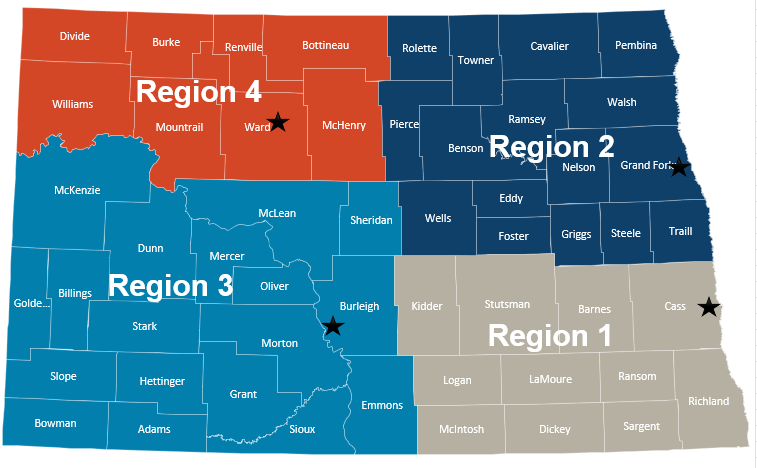
North Dakota regional map showing what counties are located in each region as it pertains to Career Navigators.
Emergency Medicaid
Emergency Medicaid is temporary health coverage for non-citizens who do not qualify for regular Medicaid but have an urgent medical need, such as childbirth or a serious illness. This coverage ends once the emergency is over.
To qualify you must:
- Be a resident of North Dakota
- Complete an application and submit your medical records to the North Dakota Health and Human Services Customer Support Center for review. You can contact the Customer Support Center at 866-614-6005 or 701-328-1000; 711 (TTY)
- Meet all other Medicaid requirement, such as income limits
Healthcare coverage (health insurance)
What is healthcare coverage?
Healthcare coverage (also called health insurance) is a health plan that helps pay for medical care such as doctor visits, hospital care, medicine and other essential health needs.
Healthcare in the U.S. is expensive. Without a health plan, you may have to pay the full cost of your doctor's visit. Every plan is different; some pay for most costs, others only pay for part of it, so it's important to understand what your plan covers. If you have questions, your Health Coordinator or case manager can help explain your options.
Visit the Medicaid Eligibility for more information on the types of healthcare coverage available.
Due to a new law passed in July 2025, starting Oct. 1, 2026, the Medicaid eligibility and work requirements for some refugees and newcomers will change.
Visit the Stay Enrolled webpage to stay up to date to learn about who is affected and what you need to do to keep your benefits. For more information or to speak with someone directly about Medicaid benefits, contact the Customer Support Center or a local Human Service Zone office.
Private insurance
Private health insurance is coverage you can get through an employer or by buying a plan directly from a health insurance company. It usually costs more than Medicaid or Refugee Medical Assistance. Ask your employer about the plans available to you and your family.
How people get private insurance:
- Through work (employer-based insurance): Many employers offer health insurance to their employees. If you qualify, your employer may pay part of the cost and you pay the rest.
- Through the Health Insurance Marketplace: If your employer does not offer insurance, you may be able to buy a plan through the federal HealthCare.gov Marketplace. Depending on your income and immigration status, you may get a discount (called a subsidy) to help lower the cost of monthly payments.
- Directly from an insurance company. Some people choose to buy a plan directly, but this can be more expensive.
Public health services
In addition to community health centers, local public health units offer important services for individuals and families. Service may include:
- Vaccines
- Health screenings
- Family planning
- education and outreach
- Help with communicable disease prevention
Public health units are located throughout North Dakota and serve all residents, regardless of income and insurance status. To find a local public health unit or to see a full list of services, visit:
Vaccines
Vaccines protect people of all ages from serious diseases like chickenpox, measles, polio, flu, etc. They also help keep schools, workplaces and communities healthy by preventing the spread of illness.
Vaccine Basics
- Children need vaccines early because their immune systems are still developing. Vaccines protect them from diseases that can be very dangerous in childhood.
- Adults also need certain vaccines to stay protected, and some may be required for school, work or travel.
- If you are applying for a green card, you must also submit proof of required vaccines as part of the immigration process.
Vaccines for Children
The Vaccines for Children program provides free vaccines to children ages 0 - 18 who:
- Have Medicaid
- Have no insurance
- Are underinsured (their insurance doesn't cover vaccines)
Vaccines for Adults
The Vaccines for Adults program offers certain vaccines at no cost to adults ages 19 and older who:
- Have no insurance
- Are underinsured (their insurance doesn't cover vaccines)
You can get vaccines from your doctor, clinics, local public health unit or use the North Dakota Immunization Locator to find a site near you.
Tips: Bring your vaccination records if you have them. If you don't, a provider can still help you. Children often need vaccines before starting school or childcare. Ask your doctor or the clinic which vaccines you or your children may need.
Dental Services
Taking care of your teeth helps keep your whole body healthy. It's especially important to take children for regular dental checkups as soon as their first teeth appear.
If you need help finding a dentist:
- Contact your local federally qualified health center. Many offer dental care at low or no cost
- Visit Insure Kids Now to search for providers who accept Medicaid and the Children's Health Insurance Program (CHIP).
Service may include:
- Cleanings and checkups
- Fillings and extractions
- Fluoride treatments
- Oral health education
- And more!