
From Personal Experience to Public Impact: One Journey Toward Accessibility for All
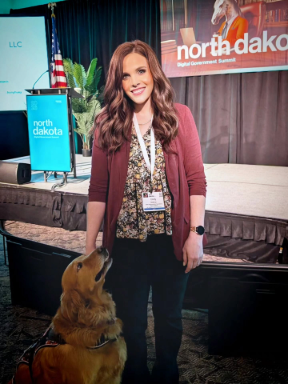 In March 2013, Emily Riedman's life changed forever. Just months after graduating from college, a devastating car accident replaced her plans for the future with hospitals, rehabilitation and uncertainty.
Medical professionals told her she would likely never work full time again, and some believed permanent disability would define the rest of her life. Instead of accepting those predictions, Emily committed herself to recovery and rebuilding her future.
While most people choose careers based on their personal interests, Emily’s path to becoming the HHS Communications Team ADA and data specialist began when she turned tragedy into a calling.
Realizing access isn’t equal for everyone
Before the accident, accessibility was something Emily rarely thought about. Like many people, she assumed buildings, services and technology worked for everyone.
Her perspective changed once she encountered barriers herself. From inaccessible information to physical and digital obstacles, she quickly learned how easily people can be excluded when accessibility is not always considered. She also learned that many individuals, like herself, hesitate to ask for help because they do not want to draw attention to themselves or feel like a burden.
Over the next five years, Emily worked through physical therapy, occupational therapy and speech therapy to regain her independence. In 2018, she returned to the workforce with a part-time position at the Abused Adult Resource Center. For the first time, she openly discussed her accessibility needs in a professional setting and requested accommodations for her service dog, Bentley.
Emily said this experience helped her understand that accessibility is not about special treatment. It is about creating opportunities for people to contribute their talents and succeed.
Her passion for accessibility continued to grow throughout her career. At Easter Seals Goodwill North Dakota and later at Job Service North Dakota, she became a strong advocate for accessible communication and user-centered design. She helped improve websites, educate teams and promote practices such as alternative text, plain language and accessible social media content. Through that work, I learned that accessibility is not about limitations,” Emily said. “It’s about removing barriers so people can access information, services and opportunities.”
That commitment eventually led Emily to her current role at HHS, the largest state agency that provides more than 150 critical programs and services to North Dakotans.
As an ADA digital compliance expert, she develops trainings, creates resources and guides accessibility efforts across the agency and beyond. While Emily’s work supports compliance with accessibility standards, her motivation comes from personal experience and a simple belief: accessibility matters because people matter.
Emily knows what it feels like to encounter barriers and struggle to access information others may take for granted. She also knows the difference accessibility can make in a person's ability to live independently, make informed decisions and participate fully in everyday life. That perspective continues to guide her work and has helped shape meaningful accessibility improvements for North Dakotans who rely on HHS programs and services every day.
Emily has worked diligently with HHS team members, helping them understand not only what accessibility is, but why it matters. goal is not to simply meet compliance requirements,” she said. “It is to help team members view accessibility through the lens of the North Dakotans HHS serves every day and begin integrating accessible practices into team members’ daily work.”
The quiet power of being included
One of the Communications team's early accomplishments in ADA digital compliance was developing the agency’s ADA Style Guide, which is a practical resource to help employees design accessible content while maintaining HHS branding standards. The guide explained how to use brand colors accessibly, why color contrast matters, how to write alternative text for images and why charts, graphs and other visual elements require meaningful descriptions.
The team spent months developing the guide, reviewing content and ensuring it reflected accessibility best practices. When it was finalized and shared with Team HHS, it felt like a significant step forward. An HHS team member who uses assistive technology in their daily work reached out to Emily after reviewing the ADA style guide and expressed gratitude, thanking her for how easy it was to understand and navigate.
“The team member shared how emotional it was to access the guide independently because, for the first time, they felt considered and included in the design process.” Emily said. “They felt like part of the intended audience and felt seen. Most importantly, they felt like they mattered.”
When accessibility becomes more than compliance
For the Communications team, it was a powerful reminder that accessibility is not just about meeting standards. It is about creating experiences where everyone can access information with dignity, independence and a sense of belonging.
For Emily, the moment was overwhelming. The relief she felt knowing the document was accessible was immediate, but what impacted her most was hearing how meaningful that accessibility was to someone else. She understood exactly what that team member was describing because she had experienced similar feelings herself.
“I know what it feels like to encounter barriers,” Emily said. “To struggle for access to information others can easily obtain. I also know how powerful it is when someone takes the time to remove those barriers.”
When barriers fall, people rise
This team member’s experience strengthened Emily's commitment to accessibility and reinforced an important lesson: We never truly know who may be relying on accessible content to perform their job, access services or navigate everyday life.
“Accessibility is not about documents, websites or compliance checklists,” Emily said. “It is about people. It is about ensuring every individual, regardless of ability, can access information, participate fully and complete their work with the same independence and confidence as everyone else.”
The experience strengthened Emily's commitment to accessibility and reinforced an important lesson: We never truly know who may be relying on accessible content to perform their job, access services or navigate everyday life. When accessibility is prioritized, barriers are removed. When barriers are removed, people can focus on what they are capable of achieving.
Accessibility is often viewed as a requirement, a checklist or a compliance standard. For Emily, that conversation served as a reminder that accessibility is something much more important. It is about ensuring every individual has the opportunity to access information, participate fully and navigate the world with dignity and independence. The employee's words reinforced something Emily learned years ago through her own recovery journey: when barriers are removed, people can focus on what they are capable of achieving. Sometimes, the greatest measure of success is not a completed project or a compliant document, but knowing someone walked away feeling seen, valued and confident that they matter.