
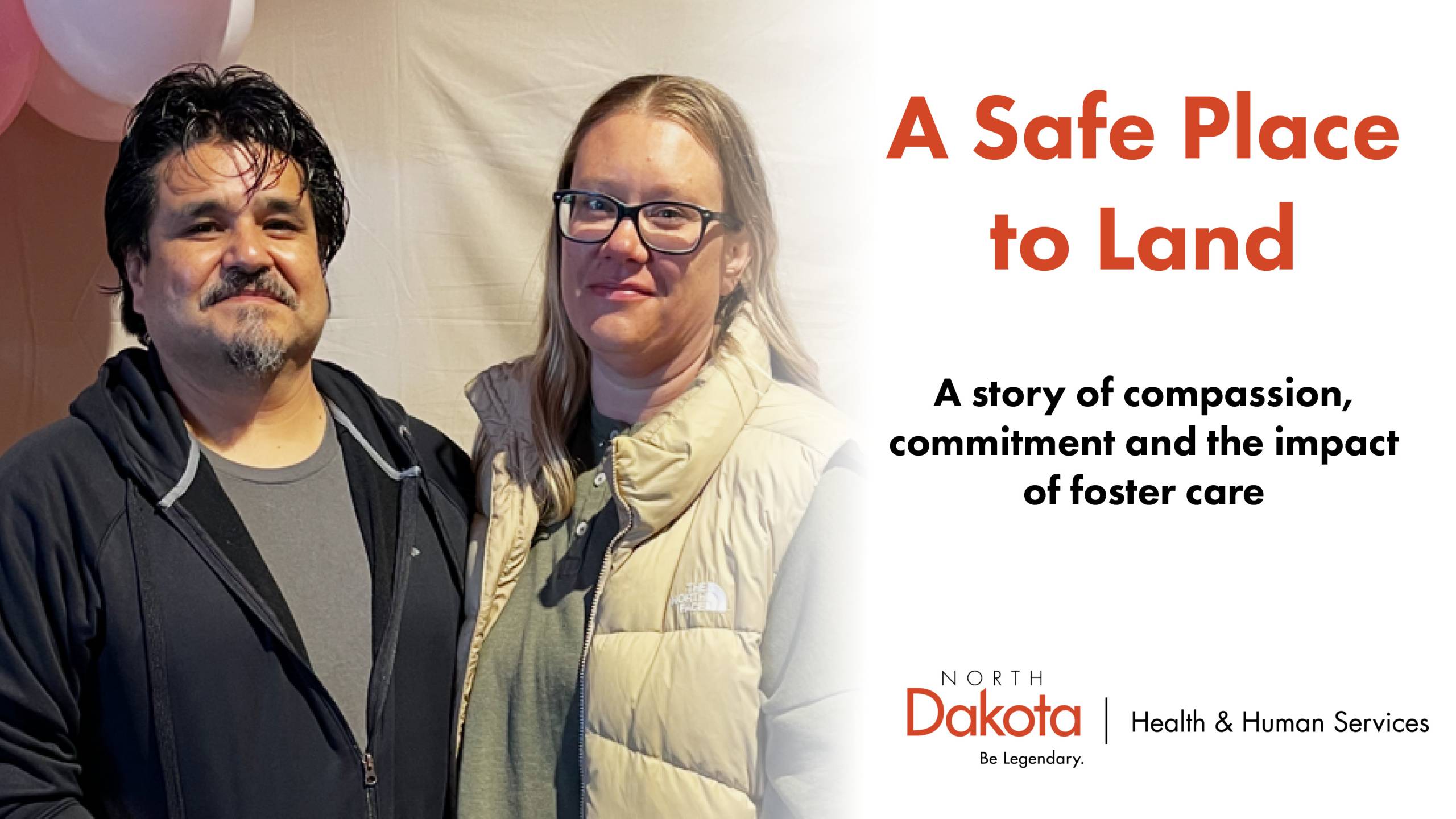
For years, foster care sat quietly on Amber and Paul Concha’s hearts. While raising five children between them, they never felt like they had the capacity. Foster care was something they thought about and always imagined might happen “someday.”
Then, in 2023, Paul beat kidney cancer. The couple found themselves looking at life differently and thinking more intentionally about how they wanted to spend their time and energy moving forward.
“God gave our family a second chance, and we wanted to use it to give someone else a second chance,” Amber said.
By 2024, the Conchas were entering a new season of life with only one child still living at home. Amber had recently started working as a Head Start teacher and saw firsthand how many children in the program were in foster care. “It tore my heart apart,” she said.
During Foster Care Awareness Month, someone from their local human service zone visited the school to speak with staff about foster care. Flyers placed around the break room caught Amber’s attention repeatedly. She could not shake the feeling that maybe it was finally time.
Amber reached out to a longtime friend at the zone office to learn more about fostering. During that conversation, she learned that one of her own students, along with the child’s sibling, urgently needed a home. “To me, that was the sign,” Amber said. Amber had made that call on a Friday. She was able to obtain a relative license because she was a teacher to one of the girls, and by Tuesday, the two sisters were settling into the Conchas’ home.
That was their first “yes.”
Months later came another call about the girls’ brother. They said yes again. Then, after initially needing to say no a few times while they worked through logistics and space concerns, came one last call about the baby sibling, who was just 6 months old at the time and who would likely have been placed on the other side of the state. “The oldest of the siblings asked us, ‘Please, can we take him?’ and we knew we had to try,” explained Amber.
The Conchas knew taking in four siblings would stretch them beyond what felt comfortable. Amber said they felt more equipped to care for three children at a time. Four meant more appointments, more schedules and taking two vehicles everywhere they went as a family. But keeping the siblings together mattered more than their comfort.
Today, the children are fully woven into the fabric of the Concha family. Amber’s parents help care for the children, and the couple’s adult children step in to support them. “We probably couldn’t do this without our amazing support system,” Amber said.
That support has allowed the family to focus not only on the children in their care, but also on maintaining a positive relationship with the children’s biological parents. Amber and Paul know reunification is the goal, and they work hard to support it by keeping parents updated on medical appointments, school events and milestones. They cheer alongside them at sports and activities and hope to remain a source of support even after reunification.
“At the end of the day, you are not the parent,” Amber said. “You are their role model, providing a positive relationship and a safe space in your home to help with their healing process.”
Foster care, they say, has changed their outlook on life.
“It puts your life into perspective,” Paul said. “When you think you have a big problem, it’s really not. It makes you realize what some of these kids have gone through.”
The experience has also strengthened their marriage. “It’s all about communication,” Amber said.
Still, the couple does not pretend foster care is easy.
“I tell everybody it’s the hardest but most rewarding thing I’ve ever done,” Amber said. “It’s not easy. You’re trying to provide a safe home where children may not have been safe before. You’re building relationships with kids who carry trauma. But you get there.”
Amber is honest about the reality of fostering and says it requires patience, flexibility and commitment. “It’s a lot of time and effort,” she said. “A lot of patience, a lot of love and a lot of support.”
At the same time, she has seen the impact of that effort firsthand.
Recently, the oldest child in their care reunified with her father. Amber and Paul said watching her growth over time has been one of the most meaningful parts of their journey. “When she first came into our care, she was very reserved,” Amber said. “She didn’t talk much. She struggled with eye contact.”
Before coming to live with the Conchas, the teen had never had friends over, attended a sleepover or gone bowling. Slowly, the family introduced her to new experiences, from ice skating trips to outings with friends.
“While she was here, she found her voice,” Amber said. “She learned that her voice matters.”
Paul said the teen became one of his closest companions in the home. “We would tease each other all the time,” he said with a laugh. At first, Amber said, the teen was hesitant around Paul and reserved with male figures in general. Over time, though, their bond grew naturally. “She got to know his personality; he’s a kid at heart,” Amber said. “They really bonded.”
Saying goodbye was not easy. “It took a while for our family to find our footing again,” Amber said. “We miss her, and her siblings miss her.” Even through the heartbreak, the Conchas remain focused on what is best for the children.
“We prepared her for reunification the whole time she was with us,” Amber said. “And the growth we’ve seen in her — I’m confident that if she’s ever in a bad situation again, she would know what to do. She found her voice,” said Amber while choking up a little bit.
Fostering has changed Amber, too. She describes herself as someone who naturally wants to fix problems and make things better. Over time, she learned that sometimes children do not need someone to solve everything for them. Sometimes, they simply need someone steady. “We make ourselves available,” she said. “I don’t care if it’s 2 a.m. If you need me, I’ll be here.”
The Conchas say there is never a perfect time to become a foster parent, but for the right families, it can become one of the most meaningful experiences of their lives. “Your heart has to be in the right place,” Paul said. “You have to be prepared for the good, the bad and the ugly,” Amber added. “We’ve been through it all.”
For the Conchas, foster care was never about being perfect. It was about being willing to open their home, their lives and their hearts to children who needed a safe place to land.
“You’re their safe place,” Paul said. “That they have likely never had before.”
The couple recently updated their license to become fully licensed foster parents so they can continue caring for children in the future, even after the siblings in their home reunify. Amber said she no longer worries about becoming an empty nester.
“This is more fulfilling than anything else I can imagine doing,” she said.