
Life Safety and Construction Documentation Binder
- LSC Documentation Binder Examples Webpage - under construction
- LSC Documentation Binder Examples Printable pdf
Web References
- Link to CMS Survey and Certification memoranda, guidance, clarifications and instructions to State Survey Agencies
- Link to online certification courses from National Fire Protection Agency (NFPA)
- National Fire Protection Agency (NFPA) Codes and Standards
Health Care Facility Surveys
Documentation for Reveiw
Life Safety Code – Basic Care
Policies/Procedures
Fire Emergency Plan
Fire Watch and Notification
Smoking Policy
Fire Emergency Plan: A written plan must be provided for the protection of all patients and residents and for their evacuation in an emergency. The plan must include use of the alarm system, transmission of the alarm to the fire department, emergency phone call to the fire department, response to the alarm, isolation of the fire, evacuation of the area, evacuation of the smoke compartment, preparation for evacuation, and fire extinguishment.
Fire Watch and Notification: Where a fire alarm system is out of service for more than 4 hours in a 24-hour period, or an automatic sprinkler system is out of service for more than 10 hours in a 24-hour period, the Health Department must be notified, and the building must be evacuated or an approved fire watch provided for all areas left unprotected by the shutdown until the system has been returned to service. The fire watch must be conducted by dedicated personnel and the individuals cannot be assigned additional duties.
Smoking Policy: A written smoking policy must be developed and enforced. Staff, patients, residents, and the general public that frequent the building must be taken into consideration when developing the smoking policy. Smoking policies should be posted in conspicuous locations.
Records:
- Automatic Sprinkler System Inspection & Testing
- Automatic Sprinkler System Valves & Gauges
- Battery Pack Exit Signs and Emergency Lighting
- Fire Alarm Circuit Location Identified
- Fire Alarm Devices
- Fire Alarm System
- Fire Dampers – 4 years
- Fire Door Inspections
- Floor Finish
- Furnishings, Mattresses and Decorations
- Generator (Diesel) 30% Load Testing
- Generator 3 Year 4 Hour Load Test
- Generator Inspection & Testing
- Generator Transfer Switch
- Interior Finish
- Portable Fire Extinguishers
- Range Hood System Semi-annual & Monthly
- Smoke Detectors
Automatic Sprinkler System Inspection & Testing: The automatic fire sprinkler system must be inspected and tested in accordance with NFPA 25. A supply of spare sprinklers must be maintained on the premises (never fewer than six). The stock of spare sprinklers must correspond to all types and temperature ratings installed in the building. A sprinkler wrench must be kept on hand in a cabinet. The clearance between the sprinkler deflector and the top of storage cannot be less than 18 inches. This would include materials placed on shelves in closets, storage rooms, etc.
Automatic Sprinkler System Valves & Gauges: All valves shall be inspected weekly. Valves electrically supervised in accordance with applicable NFPA standards shall be permitted to be inspected monthly. After any alterations or repairs, an inspection shall be made by the property owner or designated representative to ensure that the system is in service and all valves are in the normal position and electrically supervised.
The valve inspection shall verify that the valves are in the following condition:
1. In the normal open or closed position
2. Sealed, locked, or supervised
3. Accessible
4. Provided with correct wrenches
5. Free from external leaks
6. Provided with applicable identification
Gauges on wet pipe sprinkler systems shall be inspected monthly to ensure that they are in good condition and that normal water supply pressure is being maintained.
Gauges on dry, preaction, and deluge systems shall be inspected weekly to ensure that normal air and water pressures are being maintained. Where air pressure supervision is connected to a constantly attended location, gauges shall be inspected monthly.
Battery Pack Exit Signs and Emergency Lighting: Battery pack exit signs and emergency lighting must to be tested for 30 seconds at least monthly and annually for a 90-minute period. Equipment must be fully operational for the duration of the test. In exit signs with two bulbs, both bulbs must be functional. Battery pack emergency lighting is required at the generator and anesthetizing locations.
Fire Alarm System: The automatic dialer portion of the fire alarm system must be tested monthly, and a complete fire alarm system test and servicing must be performed on an annual basis. The monthly testing may be done in conjunction with the fire drill. The fire alarm can be tested by activating a manual pull station or smoke detector. Upon activation of the alarm, determine that smoke and fire doors close properly, the fire department notification device functions, smoke dampers close, etc. Annual test documentation must itemize initiation devices and notification devices individually and list device type, address, location, and test results.
Fire Alarm Circuit Location Identified: The location of the dedicated branch circuit disconnecting means shall be permanently identified at the control unit. For fire alarm systems, the circuit disconnecting means shall be identified as "FIRE ALARM CIRCUIT" and shall have a red marking. The circuit disconnecting means shall be accessible only to authorized personnel. The dedicated branch circuit(s) and connections shall be protected against physical damage.
Fire Alarm Devices: Device test results (alarm initiating, supervisory alarm initiating, and notification) shall provide an itemized list with the device type, address, location, and test result as required.
Smoke Detectors: The sensitivity of the smoke detectors must be determined during the first year after installation and every alternate year thereafter. After the second required calibration test, if the detector has remained within its listed and marked sensitivity range, the length of time between calibration tests can be extended, not to exceed 5 years.
Fire Dampers: Fire dampers need to be continuously maintained in a reliable operating condition as required by NFPA 90A. Maintenance for fire dampers is to be performed at least every 4 years. Maintenance of fire dampers includes: fusible links removed; dampers operated to verify that they close fully; latch, if provided, checked; and moving parts lubricated as necessary.
Fire Door Inspections: Fire-rated door assemblies shall be inspected and tested in accordance with NFPA 80, Standard for Fire Doors and Other Opening Protectives. Door assemblies for which the door leaf is required to swing in the direction of egress travel shall be inspected and tested not less than annually.
Fire Drills: Each resident shall receive an individual fire drill walk-through within five days of admission. Residents and staff, as a group, must evacuate the building or relocate to an assembly point identified in the fire evacuation plan. One drill per year for total building evacuation by all staff and residents is required. Drills must be conducted monthly (a minimum of 12 per year) alternating with all work shifts.
Written records of fire drills must be maintained. Written documentation must include the dates and times of drills, duration, staff and residents participating, residents absent and why, description of the drill, including escape path used, and evidence of a simulated call to the fire department.
Floor Finish: Interior floor finish must be Class I or Class II floor finishes (such as carpet) in corridors and exits. Facilities must have documentation as to the floor finish rating of the material.
Furnishings, Mattresses and Decorations: In areas not protected by automatic fire sprinklers, newly introduced upholstered furniture owned by the facility must meet NFPA 260 and ASTM E 1537, upholstered furniture belonging to residents in sleeping rooms shall not be required to be tested, provided that a smoke alarm is installed in such rooms; battery-powered single-station smoke alarms shall be permitted in such rooms. In areas not protected by automatic fire sprinklers, newly introduced mattresses owned by the facility must meet ASTM E 1590, mattresses belonging to residents in sleeping rooms shall not be required to be tested, provided that a smoke alarm is installed in such rooms; battery-powered single-station smoke alarms shall be permitted in such rooms. New draperies, curtains, and other similar loosely hanging furnishings and decorations in board and care facilities shall meet the NFPA 701, In other than common areas, new draperies, curtains, and other similar loosely hanging furnishings and decorations shall not be required to comply where the building is protected throughout by an approved automatic sprinkler system.
Generator Inspection & Testing: Generator sets (used for emergency lighting) shall be tested 12 times a year, with testing intervals of not less than 20 days nor more than 40 days. Generator sets serving essential electrical systems shall be tested in accordance with NFPA 110, Standard for Emergency and Standby Power Systems. EPSSs, including all appurtenant components, shall be inspected weekly and exercised under load at least monthly.
Generator 3 Year 4 Hour Load Test: Generator sets (used for emergency lighting) shall be exercised under load once every 36 months for 4 continuous hours.
Generator (Diesel) 30% Load Testing: Diesel generator sets (used for emergency lighting) in service shall be exercised at least once monthly, for a minimum of 30 minutes, using one of the following methods:
- Loading that maintains the minimum exhaust gas temperatures as recommended by the manufacturer.
- Under operating temperature conditions and at not less than 30 percent of the EPS nameplate kW rating.
Diesel-powered EPS installations that do not meet the requirements shall be exercised monthly with the available EPSS load and shall be exercised annually with supplemental loads at not less than 50 percent of the EPS nameplate kW rating for 30 continuous minutes and at not less than 75 percent of the EPS nameplate kW rating for 1 continuous hour for a total test duration of not less than 1.5 continuous hours.
Generator Transfer Switch: Generator automatic transfer switches (used for emergency lighting) must be operated monthly, consisting of electrically operating the transfer switch from the standard position to the alternate position and then a return to the standard position. Maintenance programs for transfer switches include checking of connections, inspection or testing for evidence of overheating and excessive contact erosion, removal of dust and dirt, and replacement of contacts when required. The maintenance procedure and frequency should follow those recommended by the manufacturer. NFPA 110 suggests visual inspection and cleaning annually and recommends an annual maintenance program including one major maintenance and three quarterly inspections. The major maintenance includes a thermographic or temperature scan of the automatic transfer switch.
Interior Finish: Interior finish documentation is required for wall and ceiling materials that are required to have a Class A or Class B interior finish rating.
Portable Fire Extinguishers: Monthly and annual maintenance of the portable fire extinguishers must be conducted. The 6-year chemical change for dry chemical fire extinguishers and the 12-year hydrostatic vessel test must be performed. CO2 portable fire extinguisher vessels must be hydrostatically tested every 5 years.
Range Hood System: The UL 300 kitchen range hood automatic extinguishing system must be serviced and inspected for cleaning every 6 months. On a monthly basis an inspection shall be conducted in accordance with the manufacturer's listed installation and maintenance manual or the owner's manual.
At a minimum, this quick check or inspection shall include verification of the following:
- The extinguishing system is in its proper location.
- The manual actuators are unobstructed.
- The tamper indicators and seals are intact.
- The maintenance tag or certificate is in place.
- No obvious physical damage or condition exists that might prevent operation.
- The pressure gauge, if provided, shall be inspected physically or electronically to ensure it is in the operable range.
- The nozzle blowoff caps, where provided, are intact and undamaged.
Neither the protected equipment nor the hazard has not been replaced, modified, or relocated.
If any deficiencies are found, appropriate corrective action shall be taken immediately. At least monthly, the date the inspection is performed and the initials of the person performing the inspection shall be recorded. The records shall be retained for the period between the semiannual maintenance inspections.
A K-type fire extinguisher is required in kitchens that are equipped with a UL 300 hood system. A sign must be installed instructing on the use of the extinguisher.
Documentation for Review
Life Safety Code – Health Care
Policies/Procedures
- Alcohol Based Hand Rub Solutions
- Emergency Preparedness
- Fire Emergency Plan
- Fire Watch and Notification
- Risk Assessments - In new or remodeled construction
- Smoking Policy
Alcohol Based Hand Rub Solutions: The dispensers must be installed in a manner that minimizes leaks and spills that could lead to falls and protects against access by vulnerable populations, such as residents in dementia units. Where dispensers are installed in a corridor, the corridor must be at least 6 feet wide. The maximum individual dispenser fluid capacity is limited to 0.32 gallons in rooms, corridors, and areas open to corridors. The maximum individual dispenser fluid capacity is limited to 0.53 gallons in suites of rooms. The dispensers must be installed at least 4 feet apart. Not more than a total of 10 gallons of solution can be in use in a single smoke compartment outside of a storage cabinet, excluding one individual dispenser per room. Storage of more than 5 gallons of solution in a single smoke compartment must meet the requirements of NFPA 30. The dispensers cannot be installed over or directly adjacent to an ignition source. Dispensers installed directly over carpeted floor surfaces are permitted only in smoke compartments protected by automatic sprinkler systems.
Emergency Preparedness: The facility must comply with all applicable Federal, State and local emergency preparedness requirements. The facility must establish and maintain a comprehensive emergency preparedness program.
Fire Emergency Plan: A written plan must be provided for the protection of all patients and residents and for their evacuation in an emergency. The plan must include use of the alarm system, transmission of the alarm to the fire department, emergency phone call to the fire department, response to the alarm, isolation of the fire, evacuation of the area, evacuation of the smoke compartment, preparation for evacuation, and fire extinguishment.
Fire Watch and Notification: Where a fire alarm system is out of service for more than 4 hours in a 24-hour period, or an automatic sprinkler system is out of service for more than 10 hours in a 24-hour period, the Health Department must be notified, and the building must be evacuated or an approved fire watch provided for all areas left unprotected by the shutdown until the system has been returned to service. The fire watch must be conducted by dedicated personnel and the individuals cannot be assigned additional duties.
Risk Assessments: Risk Assessments shall be conducted on systems in new or remodeled construction that are included in the following chapters of NFPA 99, Health Care Facilities Code, 2012 edition: Chapter 5 – Gas and Vacuum Systems; Chapter 6 – Electrical Systems; Chapter 9 – Heating, Ventilation, and Air Conditioning; Chapter 10 – Electrical Equipment; and Chapter 11 – Gas Equipment. The records where the facility has documented its risk assessments should be kept up to date and available on site for inspectors to be able to understand the appropriate category of systems that should be installed in the facility.
Smoking Policy: A written smoking policy must be developed and enforced. Staff, patients, residents, and the general public that frequent the building must be taken into consideration when developing the smoking policy. Smoking policies should be posted in conspicuous locations.
Records:
- Automatic Sprinkler System Inspection & Testing
- Automatic Sprinkler System Valves & Gauges
- Battery Pack Exit Signs and Emergency Lighting
- Fire Alarm Circuit Location Identified
- Fire Alarm Devices
- Fire Alarm System
- Fire Dampers – 4 years
- Fire Door Inspections
- Floor Finish
- Furnishings, Mattresses and Decorations
- Generator (Diesel) 30% Load Testing
- Generator 3 Year 4 Hour Load Test
- Generator Inspection & Testing
- Generator Transfer Switch
- Interior Finish
- Portable Fire Extinguishers
- Range Hood System Semi-annual & Monthly
- Smoke Detectors
Automatic Sprinkler System Inspection & Testing: The automatic fire sprinkler system must be inspected and tested in accordance with NFPA 25. A supply of spare sprinklers must be maintained on the premises (never fewer than six). The stock of spare sprinklers must correspond to all types and temperature ratings installed in the building. A sprinkler wrench must be kept on hand in a cabinet. The clearance between the sprinkler deflector and the top of storage cannot be less than 18 inches. This would include materials placed on shelves in closets, storage rooms, etc.
Automatic Sprinkler System Valves & Gauges: All valves shall be inspected weekly. Valves electrically supervised in accordance with applicable NFPA standards shall be permitted to be inspected monthly.
After any alterations or repairs, an inspection shall be made by the property owner or designated representative to ensure that the system is in service and all valves are in the normal position and electrically supervised.
The valve inspection shall verify that the valves are in the following condition:
- In the normal open or closed position
- Sealed, locked, or supervised
- Accessible
- Provided with correct wrenches
- Free from external leaks
- Provided with applicable identification
Gauges on wet pipe sprinkler systems shall be inspected monthly to ensure that they are in good condition and that normal water supply pressure is being maintained.
Gauges on dry, preaction, and deluge systems shall be inspected weekly to ensure that normal air and water pressures are being maintained. Where air pressure supervision is connected to a constantly attended location, gauges shall be inspected monthly.
Battery Pack Exit Signs and Emergency Lighting: Battery pack exit signs and emergency lighting must to be tested for 30 seconds at least monthly and annually for a 90-minute period. Equipment must be fully operational for the duration of the test. In exit signs with two bulbs, both bulbs must be functional. Battery pack emergency lighting is required at the generator and anesthetizing locations.
Cubicle Curtains and Draperies: Draperies, curtains, decorations, wall hangings, theatre curtains, and other similar furnishings must be flame resistant. Where laundering will remove the flame-retardant application, documentation is required to verify that these materials have been re-treated.
Fire Alarm System: The automatic dialer portion of the fire alarm system must be tested monthly, and a complete fire alarm system test and servicing must be performed on an annual basis. The monthly testing may be done in conjunction with the fire drill. Note that activation of the fire alarm is not required during the drill on the night shift. However, the fire alarm system must still be tested each month. The fire alarm can be tested by activating a manual pull station or smoke detector. Upon activation of the alarm, determine that smoke and fire doors close properly, the fire department notification device functions, smoke dampers close, etc. Annual test documentation must itemize initiation devices and notification devices individually and list device type, address, location, and test results.
Fire Alarm Circuit Location Identified: The location of the dedicated branch circuit disconnecting means shall be permanently identified at the control unit. For fire alarm systems, the circuit disconnecting means shall be identified as "FIRE ALARM CIRCUIT" and shall have a red marking. The circuit disconnecting means shall be accessible only to authorized personnel.
The dedicated branch circuit(s) and connections shall be protected against physical damage.
Fire Alarm Devices: Device test results (alarm initiating, supervisory alarm initiating, and notification) shall provide an itemized list with the device type, address, location, and test result as required.
Smoke Detectors: The sensitivity of the smoke detectors must be determined during the first year after installation and every alternate year thereafter. After the second required calibration test, if the detector has remained within its listed and marked sensitivity range, the length of time between calibration tests can be extended, not to exceed 5 years.
Fire Dampers: Fire dampers need to be continuously maintained in a reliable operating condition as required by NFPA 90A. Maintenance for fire dampers is to be performed at least every 4 years (6 years in hospitals). Maintenance of fire dampers includes: fusible links removed; dampers operated to verify that they close fully; latch, if provided, checked; and moving parts lubricated as necessary.
Fire Door Inspections: Fire-rated door assemblies shall be inspected and tested in accordance with NFPA 80, Standard for Fire Doors and Other Opening Protectives.
Fire Drills: Fire exit drills must include the transmission of a fire alarm signal and the simulation of emergency fire conditions, except that the movement of patients or residents to safe areas or to the exterior of the building is not required. Drills must be conducted quarterly on each shift to familiarize staff with signals and emergency actions required under varied conditions. Drills must be held at unexpected times and under varying conditions to simulate an actual fire. When drills are conducted between 9:00 p.m. and 6:00 a.m., a coded announcement may be used instead of audible alarms. The purpose of a fire drill is to test the efficiency, knowledge, and response of staff. Its purpose is not to disturb or excite patients or residents. Documentation must include the date and time of the drill.
Floor Finish: All newly installed floor finishes (such as carpet) in corridors and exits must have documentation as to the floor finish rating of the material.
Furnishings and Mattresses: In areas not protected by automatic fire sprinklers, newly introduced upholstered furniture owned by the facility must meet NFPA 261 and ASTM E 1537. In areas not protected by automatic fire sprinklers, newly introduced mattresses owned by the facility must meet Part 1632 of the Code of Federal Regulations 16 and ASTM E 1590.
Generator Inspection & Testing: Generator sets shall be tested 12 times a year, with testing intervals of not less than 20 days nor more than 40 days. Generator sets serving essential electrical systems shall be tested in accordance with NFPA 110, Standard for Emergency and Standby Power Systems. EPSSs, including all appurtenant components, shall be inspected weekly and exercised under load at least monthly.
Generator 3 Year 4 Hour Load Test: Generator sets shall be exercised under load once every 36 months for 4 continuous hours.
Generator (Diesel) 30% Load Testing: Diesel generator sets in service shall be exercised at least once monthly, for a minimum of 30 minutes, using one of the following methods:
- Loading that maintains the minimum exhaust gas temperatures as recommended by the manufacturer.
- Under operating temperature conditions and at not less than 30 percent of the EPS nameplate kW rating.
Diesel-powered EPS installations that do not meet the requirements shall be exercised monthly with the available EPSS load and shall be exercised annually with supplemental loads at not less than 50 percent of the EPS nameplate kW rating for 30 continuous minutes and at not less than 75 percent of the EPS nameplate kW rating for 1 continuous hour for a total test duration of not less than 1.5 continuous hours.
Generator Transfer Switch: Automatic transfer switches must be operated monthly, consisting of electrically operating the transfer switch from the standard position to the alternate position and then a return to the standard position. Maintenance programs for transfer switches include checking of connections, inspection or testing for evidence of overheating and excessive contact erosion, removal of dust and dirt, and replacement of contacts when required. The maintenance procedure and frequency should follow those recommended by the manufacturer. NFPA 110 suggests visual inspection and cleaning annually and recommends an annual maintenance program including one major maintenance and three quarterly inspections. The major maintenance includes a thermographic or temperature scan of the automatic transfer switch.
Interior Finish: Interior finish documentation is required for wall and ceiling materials that are required to have a Class A, Class B, or Class C interior finish rating.
Portable Fire Extinguishers: Monthly and annual maintenance of the portable fire extinguishers must be conducted. The 6-year chemical change for dry chemical fire extinguishers and the 12 year hydrostatic vessel test must be performed. CO2 portable fire extinguisher vessels must be hydrostatically tested every 5 years.
Range Hood System: The UL 300 kitchen range hood automatic extinguishing system must be serviced and inspected for cleaning every 6 months. On a monthly basis an inspection shall be conducted in accordance with the manufacturer's listed installation and maintenance manual or the owner's manual.
At a minimum, this quick check or inspection shall include verification of the following:
1. The extinguishing system is in its proper location.
2. The manual actuators are unobstructed.
3. The tamper indicators and seals are intact.
4. The maintenance tag or certificate is in place.
5. No obvious physical damage or condition exists that might prevent operation.
6. The pressure gauge, if provided, shall be inspected physically or electronically to ensure it is in the operable range.
7. The nozzle blowoff caps, where provided, are intact and undamaged.
8. Neither the protected equipment nor the hazard has not been replaced, modified, or relocated.
If any deficiencies are found, appropriate corrective action shall be taken immediately. At least monthly, the date the inspection is performed and the initials of the person performing the inspection shall be recorded. The records shall be retained for the period between the semiannual maintenance inspections.
A K-type fire extinguisher is required in kitchens that are equipped with a UL 300 hood system. A sign must be installed instructing on the use of the extinguisher.
The survey report is the written document reporting the results of the periodic review of your building for Life Safety Code compliance. The review is part of the agreement you made when you chose to participate in the federal Medicare/Medicaid benefit program. Surveyors employed by the North Dakota Department of Health conduct on-site surveys per agreement with the Centers for Medicare & Medicaid Services (CMS) of the federal government. Th building in which you provide services is compared to national fire safety standards which are identified in the Code of Federal Regulations (CFR) 483.5 through 483.75 for long term care facilities.
Along with the survey report is a 2- to 4-page cover letter which contains:
- Identification of the most prevalent findings of the survey.
- Summary of the number and types of reports in the packet.
- Identification of the essential criteria required for an acceptable plan of correction.
- Identification of the last possible date a facility is expected to be in substantial compliance.
- Identification of what will happen if substantial compliance is not achieved.
- Explanation of the procedure to follow when disagreements about survey findings have not been resolved while the surveyor was on-site.
The surveyor’s report includes a statement of the standard as well as the surveyor's reported findings. The report forms and format are directed by the Centers for Medicare & Medicaid Services and are referred to as the CMS-2567L and CMS-A form.
- CMS-2567L: surveyor’s report of facility practices relating to Life Safety Code compliance and fire protection issues.
- CM S-A form: surveyor’s report of facility practices that are not significant to a decision of substantial compliance and are advisory to the facility.
The CMS-2567L has several parts which include:
- Statement of the relative standard identified by a “K-XXX” tag which is found in the left most column on the report.
- A base statement or surveyor’s summary of the facility practice relating to the standard.
- A listing of surveyor findings which include surveyor observations, interviews, and record verification relating to the standard.
Each K-XXX tag is assigned a letter score relating to the severity and scope of the fire safety feature. It is important to fully understand the score of each K-XXX. The length of the report does not determine the score for the report.
Enclosed is a copy of the decision matrix, including definitions of severity and scope, which has been adopted by the Centers for Medicare & Medicaid Services. Some very important points are:
K-XXX tags with a score of A, B, or C mean the fire safety feature was found to be in substantial compliance and the facility is eligible for continued certification as a participant in the Medicare/Medicaid benefit program.

Image shows K tags A B C.
K-XXX tags with a score of D, E, F, or higher mean the fire safety feature was found to be out of compliance and must be corrected before a determination of substantial compliance can be made and continued certification recommended to the Centers for Medicare & Medicaid Services.
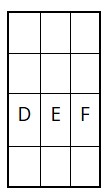
Image shows K tags D E F.
All K-XXX tags which are scored B through L require the facility to submit a written Plan of Correction (PoC). Directions for completing the plan of correction are contained in the cover letter. Each PoC must address the criteria listed in the cover letter. The PoC is reviewed to determine if the facility’s plan will change the fire safety features in a manner to assure substantial compliance at all times.
When there are questions regarding the survey report, the administration of the facility is invited to discuss the questions with the Life Safety Code manager identified in the cover letter.
Important facts to remember about the survey report are:
- The score of a K-XXX tag must be considered when reading the report.
- The goal is substantial compliance which is not the same as total compliance.
Life Safety Code Scope and Severity
Severity Levels
Level I: A deficiency that has the potential for causing no more than a minor negative impact on the resident(s).
Level II: Non-compliance with the requirements of the LSC that results in no actual harm to the residents of the facility, but with the potential for more than minimal harm.
Level III: Non-compliance with the requirements of the LSC that results in actual harm.
Level IV: Non-compliance with the requirements of the LSC that results in immediate jeopardy, a situation in which immediate corrective action is necessary because the provider’s noncompliance with one or more LSC requirements has caused, or is likely to cause, serious injury, serious harm, impairment or death to a resident receiving care in a facility. Facility practice establishes a reasonable degree of predictability of similar actions, situations, practices or incidents occurring in the future.
Scope Levels
Isolated: When one or a very limited number of residents are affected and/or the situation has occurred only occasionally or in a limited number of locations.
Pattern: When more than a very limited number of residents are affected and/or the situation has occurred in several locations. The effect of the deficient practices is not found to be pervasive throughout the facility.
Widespread: When the problem causing the deficiencies are pervasive in the facility and/or represent systemic failure that affected or has the potential to affect a large portion or all of the residents.
Level IV Immediate Jeopardy to Resident Health or Safety | J | K | L |
|---|---|---|---|
Level III Actual Harm that is not Immediate Jeopardy | G | H | I |
Level II No Actual Harm with Potential for More than Minimal Harm that is not Immediate Jeopardy | D | E | F |
Level I No Actual Harm with Potential for Minimal Harm | A | B | C |
For Provider use, Download the Life Safety Code Plan of Correction Review
Life Safety Code Plan of Correction Review Form is used to review your Plan of Correction. Your Plan of Correction for the recent Life Safety Code survey has been reviewed for compliance with the criteria established for an acceptable PoC. Please review this information for those areas that have been marked “No” or “Not Met”. It will be necessary for you to provide an acceptable response to these and return the amended Plan of Correction to our office.
Life Safety Documentation Requirements
Based on the 2012 Edition of the NFPA 101
Fire Alarm System
Initiating Devices (NFPA 72-2010; 14.4.5)
• Waterflow switches tested semi-annually
• Smoke detectors tested annually
• Heat detectors tested annually
• Duct detectors tested annually
• Manual pull stations tested annually
Supervisory Signal At Devices (NFPA 72-2010: 14.4.5)
• Low air pressure switches tested quarterly
• Low water level switches tested quarterly
• Tamper switches test semi-annually
Notification Devices (NFPA 72-2010; 14.4.5)
• Strobes, Horns, Bells & Chimes tested annually
Interface Relays and Modules (NFPA 72-2010; 14.4.5)
• Tested annually
o Magnetic hold-open
o Air handler shut-down
o Kitchen hood suppression system
o Elevator recall
o Magnetic locks/Electric strikes
o Fire pumps
o Smoke dampers
o CO2/Clean agent suppression
o Sprinkler dry-pipe/pre-action
o Overhead rolling fire doors
Control Panel Batteries (NFPA 72-2010; 14.4.5)
• Charger test performed annually
• Discharge test performed annually
• Load voltage test performed semi-annually
Smoke Detector Sensitivity Test (NFPA 72-2010;14.4.5)
• Performed every 2 years
Off-Premises Monitoring Transmission Equipment (NFPA 72-2010; 14.4.5)
• Tested annually
Fire Suppression System
Portable Fire Extinguishers (NFPA 72-2010; 14.4.5)
• Visual inspection completed monthly (NFPA 10-2010; 7.2.1.2)
• Certified maintenance completed annually (NFPA 10-2010; 7.3.1.1.1)
Alternative Suppression Systems
• Kitchen hood system visual inspection completed monthly (NFPA 17A-2009; 7.2.1)
• Kitchen hood system test completed semi-annually (NFPA 17A-2009; 7.3.3)
• Halon system inspection and test completed semi-annually (NFPA 12A-2009; 6.1.1)
• CO2 system inspection completed monthly (NFPA 12-2011; 4.8.1)
• CO2 system test completed annually (NFPA 12-2011; 4.8.3.2)
• CO2 system tank weight completed semi-annually (NFPA 12-2011; 4.8.3.5.1)
• Clean agent system inspection completed semi-annually (NFPA 2001-2012; 7.1.3)
• Clean agent system test completed annually (NFPA 2001-2012; 7.1.1)
Water-Based Suppression Systems
• Electric fire pump churn test completed weekly (NFPA 25-2011; 8.3.1.2)
• Diesel fire pump churn test completed weekly (NFPA 25-2011; 8.3.1.1)
• Control valve inspection completed monthly (NFPA 25-2011; 13.3.2.1.1)
• Wet pressure gauge inspection completed monthly (NFPA 25-2011; 5.2.4.1)
• Dry pressure gauge inspection completed weekly (NFPA 25-2011; 5.2.4.2)
• Fire department connection inspection completed quarterly (NFPA 25-2011; 13.7.1)
• Fire hose valve inspection completed quarterly (NFPA 25-2011; 13.5.6.1)
• Pre-action/Dry pipe valve priming completed quarterly (NFPA 25-2011; 13.4.3.2.1)
• Sprinkler system inspection completed annually (NFPA 25-2011; 5.2.1)
• Sprinkler system piping and hanger inspection completed annually (NFPA 25-2011; 5.2.2)
• Pre-action/Dry pipe valve trip test completed annually (NFPA 25-2011; 13.4.3.2.2)
• Main drain test completed quarterly (NFPA 25-2011; 13.2.5.1)
• Control valve exercise completed annually (NFPA 25-2011; 13.3.3.1)
• Backflow preventer test completed annually (NFPA 25-2011; 13.6.2)
• Anti-freeze test completed annually (NFPA 25-2011; 5.3.4)
• Private service fire hydrants test completed annually (NFPA 25-2011; 7.3.2)
• 2 ½” fire hose valve test completed annually (NFPA 25-2011; 13.5.6.2.1)
• Fire pump flow test completed annually (NFPA 25-2011; 8.3.3)
• Occupant use fire hose inspection completed annually (NFPA 1962-2008; 4.3.4)
• 1 ½” fire hose valve test completed every 3 years (NFPA 25-2011; 13.5.6.2.2)
• Occupant use fire hose pressure test completed initially 5 years, every 3 years after (NFPA 1962-2008; 4.3.2)
• Check valve inspection completed every 5 years (NFPA 25-2011; 13.4.2.1)
• Pressure gauge calibration completed every 5 years (NFPA 25-2011; 5.3.2)
• Standpipe waterflow test completed every 5 years (NFPA 25-2011; 6.3.1)
• Private fire service mains inspection completed every 5 years (NFPA 25-2011; 7.3.1)
• Internal inspection of piping completed every 5 years (NFPA 25-2011; 14.2.1)
• Dry head sprinkler replacement completed every 10 years (NFPA 25-2011; 5.3.1.1.1.6)
• QR head sprinkler replacement completed every 20 years (NFPA 25-2011; 5.3.1.1.1.3)
• SR head sprinkler replacement completed every 50 years (NFPA 25-2011; 5.3.1.1.1)
• Spare sprinkler list completed once (NFPA 13-2010; 6.2.9.7)
Additional Testing & Inspection Requirments
Emergency Power Generators
• Inspection completed weekly (NFPA 110-2010; 8.4.1)
• Battery electrolyte levels/voltage inspected monthly (NFPA 110-2010; 8.3.7.1)
• Manual stop switch tested monthly (NFPA 110-2010; 8.4.2)
• Monthly load test completed 20 to 40 days (NFPA 110-2010; 8.4.2)
• Annual load test (if required) completed annually (NFPA 110-2010; 8.4.2.3)
• Annual fuel test completed annually (NFPA 110-2010; 8.3.8)
• Replace lead-acid start batteries completed 24 – 30 months (NFPA 110-2010; A.5.6.4.5.1)
• 3-Year 4-Hour load test completed every 3 years (NFPA 110-2010; 8.4.9)
Automatic Transfer Switches
• Inspection completed weekly (NFPA 110-2010; 8.4.1)
• Test with generator monthly (NFPA 110-2010; 8.4.6 and NFPA 99-2012; 6.4.4.1.1.4)
Medical Gas and Vacuum Systems
• Maintenance and testing per policy (NFPA 99-2012; 5.1.14.4.5)
• Cross-contamination test after breach (NFPA 99-2012; 5.1.12.1.1)
• Purity and pressure test after breach (NFPA 99-2012; 5.1.12.1.1)
• Non-stationary booms w/flexible connectors leak test completed every 18 months (NFPA 99-2012; 5.1.14.2.3.2)
• Staff training on medical gas system completed annually (NFPA 99-2012; 11.5.2.1.2)
Alternative Life Safety Measures
• Review policy per policy directive (NFPA 101-2012; 4.6.10.1)
• Implementation per policy (NFPA 101-2012; 4.6.10.1)
• Fire watch continuous as needed (NFPA 101-2012; 9.6.1.6 and NFPA 25-2011; 15.5.2)
Fire/Smoke Damper Test
• Inside hospital facility 1 year then 6 years (NFPA 80-2010; 19.4 and NFPA 105-2010; 6.5.2)
• Outside hospital facility 1 year then 4 years (NFPA 80-2010; 19.4 and NFPA 105-2010; 6.5.2)
• Overhead rolling door drop test completed annually (NFPA 80-2010; 5.2.1)
• Side-hinged fire doors inspected and test annually (NFPA 101-2012; 8.3.3.1)
• Exit sign illumination inspection completed monthly (NFPA 101-2012; 7.10.9.1)
• Elevator recall tested monthly for elevators equipped with Fire Fighter Service (NFPA 101-2012; 9.4.6.2)
• Remove grease from kitchen hood completed semi-annually (NFPA 96-2011; 11.4)
• Risk assessment to determine category designation of systems completed annually (NFPA 99-2012; 4.2)
• Patient bed location receptacles test completed annually (NFPA 99-2012; 6.3.4.1)
• Ground fault circuit interrupter test completed monthly (CMS 482.41(c)(2) )
• 30 second battery powered emergency light tested monthly (NFPA 101-7.9.3.1.1(1) )
• 90 minute battery powered emergency light tested annually (NFPA 101-7.9.3.1.1(3) )
• Healthcare fire drills completed 1 per shift per quarter (NFPA 101-18.7.1.6 & 19.7.1.6)
• Ambulatory fire drills completed 1 per shift per quarter (NFPA 101-20.7.1.6 & 21.7.1.6)
• Business fire drills completed 1 per shift per year (NFPA 101-38.7.2 & 39.7.2)
• Waste/linen chute doors inspected and tested annually (NFPA 82-2009; 10.2.2)