
Skilled nursing facilities in North Dakota are licensed by the state and certified by the Centers for Medicare & Medicaid Services, CMS, to participate in the Medicare and Medicaid programs. The North Dakota Health and Human Services, Health Facilities Unit, has the contract for conducting the Medicare/Medicaid certification survey for CMS in these nursing facilities.
Directory of Skilled Nursing Facilities in North Dakota
This directory lists medical directors alphabetically by city.
| City | Facility | Medical Director | |
|---|---|---|---|
| Aneta | Aneta Parkview Health Center | Jonathan Berg | jbergmd@gmail.com |
| Ashley | Ashley Medical Center Nursing Home | Steve Inglish | singlishmd@gmail.com |
| Beulah | Knife River Care Center | Michelle Placke | mplacke@coalcountryhealth.com |
| Bismarck | Baptist Health & Rehab | Brian Hebert | brian.hebert@essentiahealth.org |
| Bismarck | St. Vincent's – a Prospera Community | Mubashir Badar | issa.alrabadi@sanfordhealth.org |
| Bismarck | Benedictine Living Communities, Inc | Karin Willis | 55willis@aol.com |
| Bismarck | Missouri Slope | Brian Hebert | brian.hebert@essentiahealth.org |
| Bismarck | Missouri Slope | Brian Hebert | brian.hebert@essentiahealth.org |
| Bismarck | Augusta Place – a Prospera Community | Issa Al Rabadi | issa.alradbadi@sanfordhealth.org |
| Bottineau | Good Samaritan Society – Bottineau | Jessica Skjolden | jskjolden@outlook.com |
| Cando | Towner County Medical Center Inc | Anil Potti | pottianil@gmail.com |
| Carrington | Alpha, Inc | Michael Page | michael.page501@commonspirit.org |
| Cavalier | Wedgewood Manor | K.S. Sumra | lisal@cavalierhospital.com |
| Cooperstown | Griggs County Care Center | William McKinnon | wmckinnon@coopermc.com |
| Devils Lake | Eventide Heartland | Nicole Samson | nicole.samson@eventide.org |
| Dickinson | Benedictine Living Communities, Inc | Cory Rathgeber | cory.rathgeber@sanfordhealth.org |
| Dickinson | St. Luke's Home | Patricia Anderson | patricia.w.anderson@sanfordhealth.org |
| Dunseith | Dunseith Community Nursing Home | Brian Selland | bselland@turtlemountainfamilymedicine.com |
| Ellendale | Benedictine Living Communities, Inc | Tara Mertz-Hack | tara.mertz-hack@sanfordhealth.org |
| Enderlin | SMP Health – Maryhill | Genevieve Goven | genevieve.goven@sanfordhealth.org |
| Fargo | SMP Health – St. Catherine South | Paul Carson | paul.carson@ndsu.edu |
| Fargo | SMP Health – St. Catherine North | Paul Carson | paul.carson@ndus.edu |
| Fargo | Eventide Fargo | Michael Sand | michael.sand@eventide.org |
| Fargo | The Meadows on University | Andrew Burgard | andrew.burgard@sanfordhealth.org |
| Fargo | Fargo Elim Health Care Center | Lindsey Dahl | lindsey.dahl@sanfordhealth.org |
| Fargo | Bethany on University | Parul Gupta | parul.gupta@essentiahealth.org |
| Fargo | Bethany on 42nd | Parul Gupta | parul.gupta@essentiahealth.org |
| Forman | Four Seasons Healthcare Center | Tara Mertz-Hack | tara.mertz-hack@sanfordhealth.org |
| Garrison | Benedictine Living Communities, Inc | Jon Dornacker | jon.dornacker@gmail.com |
| Garrison | Garrison Memorial Hospital Nursing Facility | Jon Dornacker | jon.dornacker@commonspirit.org |
| Glen Ullin | Marian Manor Healthcare Center | Paul Swisher | swishmon@yahoo.com |
| Grafton | Lutheran Sunset Home | Matthew Viscito | mviscito@unitymedcenter.com |
| Grand Forks | Woodside Village | Christopher Henderson | chenderson@valleyseniorliving.org |
| Grand Forks | Valley Senior Living on Columbia | Christopher Henderson | chenderson@valleyseniorliving.org |
| Hankinson | St. Gerard's Community of Care | Duane Strand | duane.strand@essentiahealth.org |
| Harvey | SMP Health – St. Aloisius | Charles Nyhus | cnyhusmd@gmail.com |
| Hatton | Hatton Prairie Village | James Mehus | ctredwell@hattonprairievillage.com |
| Hettinger | Western Horizons Care Center | Joshua Ranum | joshr@wrhs.com |
| Hillsboro | Sanford Hillsboro Care Center | Charles Breen | charles.breen@sanfordhealth.org |
| Jamestown | Eventide Jamestown | Derek Brickner | brickner88@gmail.com |
| Jamestown | SMP Health – Ave Maria | Sarah Schatz | sarah.schatz@sanfordhealth.org |
| Killdeer | Hill Top Home of Comfort | Cory Rathgeber | cory.rathgaber@sanfordhealth.org |
| Lakota | Good Samaritan Society – Lakota | William McKinnon | wmckinnon@coopermc.com |
| LaMoure | Benedictine Living Communities, Inc | Tara Mertz-Hack | tara.mertz-hack@sanfordhealth.org |
| Langdon | Maple Manor Care Center | Dr. Rory Ratzlaff | mmoffice@mmcarecenter.com |
| Larimore | Good Samaritan Society – Larimore | Caitlin Sisson | caitlin.sisson2@sanfordhealth.org |
| Lisbon | North Dakota Veterans Home | Tanya Diegel, DO | tanya.diegel@essentiahealth.org |
| Lisbon | Parkside Lutheran Home | Tara Mertz-Hack | tara.mertz-hack@sanfordhealth.org |
| Mandan | Good Samaritan Society | Anthony Johnson | anthony.johnson@sanfordhealth.org |
| Mandan | Sunset Drive – a Prospera Community | Johnson Anthony | anthony.johnson@sanfordhealth.org |
| Mandan | Dakota Alpha | Jacqueline Quisno | jacqueline.quisno@und.edu |
| Mayville | Luther Memorial Home | James Mehus | james.mehus@sanfordhealth.org |
| McVille | Nelson County Health System Care Center | Jonathan Berg | jbergmd@gmail.com |
| Minot | Minot Rehabilitation and Care Center, LLC | Chittararton Routray | routrayc@gmail.com |
| Minot | Trinity Homes | James Schmidt | james.schmidt@trinityhealth.org |
| Napoleon | Wentz Living Center | Donald Kosiak | dkosiak@yahoo.com |
| New Rockford | Lutheran Home of the Good Shepherd | Michael Page | kjensrud@lhgs.org |
| New Salem | Elm Crest Manor | Dr. Donald Kosiak | donald.kosiak@sanfordhealth.org |
| Oakes | Good Samaritan Society – Oakes | Tara Mertz-Hack | pbergh@good-sam.com |
| Park River | Good Samaritan Society – Park River | Joel Johnson | jjj@1stcarehc.com |
| Richardton | Richardton Health Center, Inc | Lee Kiedrowski | lkiedrowski@mchsnd.org |
| Rolette | Rolette Community Care Center | Brian Selland |
- U.S. Department of Health and Human Services Nursing Home Compare Website
- General Email Address for LTC Complaints and Concerns LTCconcerns@nd.gov
Nurse Aide Registry and Abuse Investigation
The Health Facilities Unit is designated by the Centers for Medicare & Medicaid Services as the agency responsible for the registration of certified nursing assistants (CNAs). In addition to maintaining the registry, Health Facilities receives and investigates allegations of abuse in long-term care facilities.
Search the Certified Nurse Aide Validated Abuse List
Regulatory Code
- Read the North Dakota Licensing Rules for Nursing Facilities, Chapter 33-07-03.2
- Read the North Dakota General Standards of Construction and Equipment for Nursing Facilities, Chapter 33-07-04.2
- Information on Paid Feeding Assistants, Chapter 33-07-03.2-16.1
- Information on North Dakota Licensing Medical Facilities, Chapter 23-16
Additional Resources
Memorandum
To: North Dakota LTC and Basic Care Adminstrators
From: Darleen Bartz, PhD, Chief Health Resources Section
Date: August 5, 2016
Subject: Response to Questions Related to Bed Transitions
Recently, we have had questions raised with the North Dakota Department of Health related to: 1) if LTC beds had been placed in a bed layaway (for 24 months) or bed hold (for 48 months) and were due to expire, could the beds be relicensed by the facility and other licensed beds in the facility be placed into bed layaway or bed hold resulting in a new 24 month (bed layaway) or 48 month period (bed hold)? and, 2) can a facility transfer (sell) basic care beds to another facility, and then the facility that sold the beds request and be approved for new additional basic care beds from the NDDoH and OHS to replace those beds? We have visited with the department's attorney on these questions. His response was that both of these scenarios would be considered a shell game and would not be allowable.
The department's attorney referred us to a memorandum he had written in response to a similar situation in 2007. The response to these questions is based on our recent conversation with the department's attorney and the information from the previous research he had completed on this issue. This information is updated and summarized below.
The statutory moratorium on expansion of long-term and basic care bed capacity requires the beds become licensed within forty-eight months of transfer. In addition, the statutory language allows a facility to delicense up to twenty-five percent of its bed capacity for a period of twenty-four months. Delicensed bed capacity not sold or relicensed at the conclusion of the twenty-four-month period ceases to exist. If the bed capacity is transferred to another facility within the twenty-four month period, the receiving entity must license the transferred bed capacity within the forty-eight month period originally established at the time of initial delicensure. 1
The facility in the original 2007 scenario was planning to build a second facility. Their proposal was to purchase beds that were close to their expiration date, but which would expire before the new facility was constructed. In order to obtain the full (or new) 48 month period before licensure, the facility proposed to transfer bed capacity from its current facility
1 See N.D.C.C. § 23-16-01.1(2) and (5) ("Transferred bed capacity must become licensed by an entity within forty-eight months of transfer.a), see also N.D.C.C. § 23-16-01.1(6) and (7) for a twenty-four month timeframe for facilities to delicense and relicense or transfer bed capacity and N.D.C.C. §§23-09.3-01.1 for similar provisions concerning basic care facilities
period before licensure, the facility proposed to transfer bed capacity from its current facility to the new facility and replace these beds at their existing facility with the beds they were planning to purchase which were close to their expiration date. These beds transferred from their existing facility to the new facility presumably would gain the full forty-eight months to become licensed at the new facility. Thus, the entire project would be completed in a series of transactions which would individually comply with the law, but taken together these transactions were "an attempt to evade the forty-eight month limitation contained in the moratorium."
This same analysis applies to the two transactions described in the first paragraph of this memo. The department's attorney also has indicated if a facility had delicensed beds that were close to the twenty-four month expiration date and decided to relicense those beds, only to delicense other beds in the facility, this too would be considered an attempt by the facility to evade the intent set forth in statute.
The department's attorney indicated the second scenario identified in the first paragraph of this memo related to the selling of basic care beds, followed by a request for new/additional basic care beds from the Department of Health and Department of Human Services calls into question the need for the basic care beds when the facility that sold beds is the same facility requesting the new/additional basic care beds. The department's attorney recommended that such a request not be approved.
Summary of Legal Analysis
When interpreting the bed capacity moratorium, we need to be sure any interpretation is consistent with other statutory uses of bed capacity.2 The original use for licensed bed capacity is to measure the maximum number of patients that may be admitted to a facility for licensing fee purposes.3 Therefore, when discussing a facility's licensed bed capacity, each individual bed is not counted separately, but rather the sum total of beds is the relevant consideration. This is because a facility does not receive a license for each bed, but rather the facility itself is licensed, and the licensing fee is detennined by the total number of beds. Therefore, a transaction that subtracts one bed and adds another bed doesn't actually have an effect on the facility's state license.4 Also, this meaning for bed capacity implies that a bed is to be licensed at a facility whether or not it is presently occupied by a resident.
Further, the moratorium's background5 and purpose6 needs to be considered. The moratorium is the sole surviving remnant of the former certificate of need program.7
2 All statutes relating to the same topic are to be construed together. State v. Novak. 338 N.W.2d 637, 640 (N.D. 1983), Litten v. City of Fargo, 294 N.W.2d 628. 633 (N.D. 1980), Hospital Services, Inc. v.
Brackey. 283 N.W.2d 174. 1TT (N.D. 1979).
3 N.D.C.C. § 23-16-03 sets fees for facilities based on the number of beds in the facility.
4 But it may have an effect on Federal certification. That. however. is a moot issue given the state licensing issue.
5 In construing a statute. consideration must be given to the background for the enactment as ascertained from the whole act. Sheets v. Graco. Inc.. 292 N.W.2d 63. 66 (N.D. 1980).
6 Remedial statutes must be interpreted to address the mischief that the statute was enacted to correct. Northern X-Rav Co. Inc., v. State by and through Hanson, 542 N.W.2d 733, 736 (N.D.1996), Hebron
The certificate of need program existed to require review and approval for expansion of services in hospitals and related medical facilities, including skilled nursing facilities, because facilities were being constructed which greatly exceeded the needs of patients or persons in the area to be served, thereby imposing great medical costs on the public for services that were not needed.8
This legislative purpose has continued in the moratorium on expansion of long-term care bed capacity and the moratorium on expansion of basic care bed capacity. These laws have been amended to adapt their purpose to present needs in every legislative session since the certificate of need program was repealed.9 While the existing moratorium language must be interpreted on its own merits without regard to former terms, this history shows the Legislature has maintained a consistent public policy directing the reduction of state-wide licensed bed capacity, together with flexibility to transfer this capacity geographically with the ability to grant additional capacity where a shortage has been demonstrated.
The only way the proposed transactions can work is if they are independent from one another. If the transfers of beds from the existing facility are treated as completely unrelated to the beds being transferred to that facility, then both transactions would appear to be legally correct. However, doing so requires us to not see the forest because of the trees. The series of related transactions proposed are not independent from one another. The purpose of this series of related transactions is to take beds that are expiring and give them a new expiration date; or to sell beds and replace them with free beds requested from the state.
These related transactions, taken together as a single course of action, are plainly intended to evade the 24-month or 48-month time frame for licensure that has been mandated by the Legislature; or to gain revenue on existing beds by selling them and replacing them with free beds obtained from the state. It is well established law in North Dakota that a series of related transactions may be interpreted together.10 Evidence of a series of related transactions is admissible to demonstrate the intent behind one of the individual transactions.11 As found in a case involving securities fraud, the court noted the charge "arose out of the same series of events and is based upon the same acts and transactions, constituting a single act, carried out under a common scheme or plan."12
Public School Dist. No. 13 of Morton County v. United States Gypsum Co., 475 N.W.2d 120, 124 (N.D.1991) (quoting Berry v. Branner. 421 P. 2d 996, 998-999 (Or.1966).
7 See 1995 N.D. Sess. laws ch. 254.
8 See generally City of LaMoure v. State Health Council. 213 N.W.2d 869,873 (N.D. 1973).
9 See 1995 N.D. Sess. Laws ch. 254, 1997 N.D. Sess. Laws ch. 12, 1999 N.D. Sess. Laws ch. 236, 2001
N.D. Sess. Laws ch. 237 and ch. 431, 2003 N.D. Sess. Laws ch. 216, 2005 N.D. Sess. Laws ch. 241, 2007 N.D. Sess. Laws ch. 240, 2009 N.D. Sess. Laws
h.218, 2011 N.D. Sess. Laws chs. 188, 189, 2013
N.D. Sess. Laws ch. 210, 2015 N.D. Sess. Laws ch. 190.
10 Jacobson v. Mutual Ben. Health & Acc. Assn., 296 N.W. 545, 559 (N.D. 1941).
11 Amann v. Frederick, 257 N.W.2d 456, 440 (N.D.1977). Of course, if the transactions are not related, then they should not be interpreted together. See generally Griffin v. Implement Dealers' Mut. Fire Ins. Co., 241 N.W. 75, 76-77 (N.O.1932) (distinguishing conducting a single transaction from generally doing business within a given county).
12 State v. Weisser, 161 N.W.2d 360, 363 (N.D. 1968).
Further, it is also well established law in North Dakota to look at the substance of a transaction as opposed to its form or format:
- Illegality is seldom guilty of the consummate folly of flaunting its defiance of law in the face of public sentiment - of furnishing itself the evidence of its violation of law. To escape the penalties of breaking the law, it will always put on the "suits and trappings” of honest transactions………. In Edwards v. Hoeffinghoff, 38 Fed. 639, Judge Sage says: "no matter what the form of the contract, no matter how many colorings of reality and genuine dealing are thrown about the transaction, if, piercing all these disguises, the court or jury see that all these forms are merely shams, and that there was in fact no actual dealing in the article itself, but that forms were adopted as merely a semblance to deceive and evade the law, it is the duty of the court and jury to tear away the disguise, treat the transaction as it is."13
It is equally a long standing position of the North Dakota Supreme Court to forbid a person from evading a statute through indirect means.14
When the proposed series of transactions is examined as a whole, it is apparent the sole purpose is to remove the expiration from the beds transferred and placed in bed hold, or delicensed and placed in bed layaway, and give those beds a new forty-eight month (bed hold) or new twenty-four months (for delicensed beds in layaway) timeframe for licensure; or to gain revenue on selling of beds and replacing with new/additional free beds requested from the state in an area of identified need. As stated previously, the second scenario also calls in to question the need for new/additional beds in the area if the facility that sold beds is the same facility requesting the new/additional basic care beds. None of these actions (adding and subtracting beds) would result in a significant actual change in bed capacity for the facility, but would result in a new expiration date, or increased revenue from selling beds and replacing with free beds obtained from the state. This demonstrates these transactions are not intended to cause any real licensing change at that facility and is nothing more than a strawman transaction designed to evade the law.15
13 Dows v. Glaspel. 60 N.W. 60, 62-3 (N.D. 1894).
14 Straw v. Jenks. 43 N.W. 941 (Dak. 1889), Ex Parte Corliss, 114 N.W. 962, 963 (N.D. 1907), Cain v.
Merchants Nat. Bank & Trust Co., 268 N.W. 719, 722 (N.D. 1936).
15 Roeders v. City of Washburn, 298 N.W.2d 799, 781 (N.D.1980), Rozan v. Rozan, 129 N.W.2d 694, 708 (N.D.1964).
Search for Skilled Nursing Facility (SNF) Survey Results at this website.
The survey report is the written document reporting the results of the periodic review of services you provide. The review is part of the agreement you made when you chose to participate in the federal Medicare/Medicaid benefit program. Surveyors employed by the North Dakota Department of Health conduct on-site surveys per agreement with the Centers for Medicare & Medicaid Services (CMS) of the federal government. The service you provide is compared to standards of practice which are identified in the Code of Federal Regulations (CFR) 483.5 through 483.75 for long term care facilities.
Each survey report includes a cover letter which contains:
- Identification of the most prevalent findings of the survey.
- Summary of the number and types of reports in the packet.
- Identification of what will happen if substantial compliance is not achieved.
- Explanation of the procedure to follow when disagreements about survey findings have not been resolved while the surveyors were on-site.
- Identification of the essential parts required for an acceptable plan of correction.
The surveyor’s report will appear on several different forms and include a statement of the regulation as well as the surveyor’s reported findings. At times you may find the statement of the regulation to be longer than the surveyor’s report. The report forms and format are directed by the Centers for Medicare & Medicaid Services and are referred to as the CMS-2567L, CMS-2567, CMS-A form. When applicable, your survey report package will contain a separate report relating to North Dakota state licensure issues. The CMS reports are:
- CMS-2567L; surveyors report of facility practice relating to health issues including quality of life and resident rights as well as quality of care.
- CMS-2567; surveyors report of facility practice relating to Life Safety and fire protection issues.
- CMS-A form; surveyors report of facility practice that are not significant to a decision of substantial compliance and are advisory to the facility, and you are expected to correct the issues identified on this form.
- State licensing report; surveyors report of facility practice specific to licensing rules for the state of North Dakota.
The CMS-2567L or “health” portion of the survey has several parts which include:
- Identification of survey sample size on the first page.
- Statement of the relative federal regulation identified by a “F-XXX” code which is found in the left most column on the report. The statement of the regulation will be from one paragraph to three pages in length.
- A base statement or surveyor’s summary of the facility practice relating to the regulation (F-XXX).
- A listing of surveyor findings which include surveyor observations, interviews, and record verification relating to the standard of practice, F-XXX.
Each federal regulation (F-XXX) and surveyor’s report is reviewed by a team of health care professionals that includes program managers of Health Facilities. Following the review, each F number (tag) is assigned a letter score relating to the severity and scope of the facility practice. It is important to fully understand the score of each F-XXX. The length of the report does not impact the score for the report.
Enclosed is a copy of the decision matrix including definitions of severity and scope which has been adopted by the Centers for Medicare & Medicaid Services. Some very important points are:
F-XXX (tags) with a score of A, B, or C mean the facility practice was found to be in substantial compliance and the facility is eligible for continued certification as a participant in the Medicare/Medicaid benefit program.
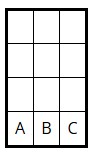
Image shows F tags A B C.
F-XXX (tags) with a score of D, G, or J mean the facility practice was found to be isolated; however, the practice must be corrected before a determination of substantial compliance can be made and continued certification recommended to the CMS.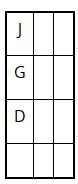
Image shows F tags D G L
All F-XXX (tags) which are scored B through L require the facility to submit a written Plan of Correction (PoC). Directions for completing the plan of correction are contained in the cover letter. Each PoC must address the points listed in the cover letter. The PoC is reviewed by a team of health care professionals to determine if the facility’s plan will change facility practice in a manner to assure substantial compliance at all times.
When there are questions regarding the survey report, the administration of the facility is invited to discuss the questions with the survey team manager. The manager to contact is identified in the cover letter.
Important facts to remember about a survey report are:
- The length of a report (number of pages) does not relate to the severity or scope of the surveyor findings.
- The score of a F-XXX must be considered when reading a report.
- The goal is substantial compliance which is not the same as total compliance.
Scope and Severity
Severity Levels
Level I - A deficiency that has the potential for causing no more than a minor negative impact on the resident(s).
Level II - Non-compliance that results in minimal physical, mental and/or psychosocial discomfort to the resident and/or has the potential to compromise the resident’s ability to maintain and/or reach his/her highest practicable physical, mental and/or psychosocial wellbeing as defined by the resident assessment, plan of care and provision of services.
Level III - Non-compliance that results in a negative outcome that has compromised the resident’s ability to maintain and/or reach his/her highest practicable physical, mental and psychosocial wellbeing as defined by the resident assessment, plan of care and provision of services.
Level IV - Immediate jeopardy, a situation in which immediate corrective action is necessary because the provider’s noncompliance with one or more requirements of participation has caused, or is likely to cause, serious injury, serious harm, impairment or death to a resident receiving care in a facility. Facility practice establishes a reasonable degree of predictability of similar actions, situations, practices or incidents occurring in the future.
Scope Levels
Isolated: When one or a very limited number of residents are affected and/or one or a very limited number of staff are involved and/or the situation has occurred only occasionally or in a limited number of locations.
Pattern: When more than a very limited number of residents are affected and/or more than a very limited number of staff are involved and/or the situation has occurred in several locations. The effect of the deficient practices is not found to be pervasive throughout the facility.
Widespread: When the problem causing the deficiencies are pervasive in the facility or represent systemic failure.
| Scope Levels | Isolated | Pattern | Widespread |
|---|---|---|---|
| Level IV – Immediate Jeopardy to Resident Health or Safety | J | K | L |
| Level III – Actual Harm that is not Immediate Jeopardy | G | H | I |
| Level II – No Actual Harm with Potential for More than Minimal Harm that is not Immediate Jeopardy | D | E | F |
| Level I – No Actual Harm with Potential for Minimal Harm | A | B | C |
Substandard Quality of Care: any deficiency in 483.13 Resident Behavior and Facility Practices, 483.15 Quality of Life, or in 483.25, Quality of Care that constitutes: immediate jeopardy to resident health or safety; or, a pattern of or wide-spread actual harm that is not immediate jeopardy; or, a widespread potential for more than minimal harm that is not immediate jeopardy, with no actual harm.
Additional Information
Rural Health Information Hub
The Rural Health Information Hub (RHIhub) is the nation's rural health information source. The website offers an online library, coverage of rural issues, state guides, toolkits, program models, and more. RHIhub provides customized assistance by phone or email and is funded by the Federal Office of Rural Health Policy. For more information follow this link Rural Health Information Hub
Quality Health Associates of North Dakota serves as a link between healthcare providers and the community.
Quality Health Associates of North Dakota
Informal Dispute Resolution (IDR)/Independent Informal Dispute Resolution (IIDR) Request
Civil Money Penalty Reinvestment Program Information
North Dakota’s Civil Money Penalty Reinvestment Program (CMPRP) accepts applications year-round for projects that improve the quality of care and quality of life for residents in certified nursing facilities. Eligible applicants may include nursing homes, nonprofit organizations, resident and family councils, academic institutions, and other entities partnering with North Dakota facilities. Projects must align with federal CMS guidelines and provide benefits that go beyond standard facility responsibilities—such as staff training, resident-centered care initiatives, culture-change programs, quality-of-life enhancements, and technical assistance. Applicants are required to submit a detailed project description, measurable goals, a budget, and letters of support from participating nursing facilities. Funded projects are publicly reported to ensure transparency and to highlight initiatives that support innovation and resident well-being across the state. Additional information regarding the program and most current CMS CMPRP application are available at: Civil Money Penalty Reinvestment Program (CMPRP).
Additional questions and inquiries can be sent to ndcmp@nd.gov.
| CMS Unique Identifier (UID) | Facility Name | CMS Certification Number | Project Title | Amount Approved for the Plan Year | Start and End Dates | Recipient of Funds |
|---|---|---|---|---|---|---|
| N/A | N/A | N/A | NHSC RN/LPN Financial Incentives | $463,456.00 | N/A | N/A |
| ND-0625-ELGS-1353 | Good Samaritan Society Lakota | 355104 | Improving Dementia Capability with CARES Dementia 5-Step Method, Training to Improve Quality of Care - Alzheimer's Disease and Dementia | $4,998.00 | 08/01/2025 - 07/31/2028 | HealthCare Interactive Inc |
| ND-1224-KRC-1254 | Knife River Care Center | 355053 | Improving Dementia Capability with CARES Dementia 5-Step Method, Training to Improve Quality of Care - Alzheimer's Disease and Dementia | $4,998.00 | 06/01/2025 - 05/31/2028 | HealthCare Interactive Inc |
| ND-0225-LMH-1293 | Luther Memorial Home | 355040 | Improving Dementia Capability with CARES Dementia 5-Step Method, Training to Improve Quality of Care - Alzheimer's Disease and Dementia | $4,998.00 | 06/01/2025 - 05/31/2028 | Luther Memorial Home |
| ND-1224-LUT-1261 | Lutheran Home of the Good Shepherd | 355041 | Improving Dementia Capability with CARES Dementia 5-Step Method, Training to Improve Quality of Care - Alzheimer's Disease and Dementia | $4,998.00 | 06/01/2025 - 05/31/2028 | HealthCare Interactive Inc |
| ND-1224-AVM-1260 | SMP Health Ave Maria | 355082 | Improving Dementia Capability with CARES Dementia 5-Step Method, Training to Improve Quality of Care - Alzheimer's Disease and Dementia | $4,998.00 | 06/01/2025 - 05/31/2028 | HealthCare Interactive Inc |
| ND-1224-MRH-1258 | SMP Health – Maryhill | 355108 | Improving Dementia Capability with CARES Dementia 5-Step Method, Training to Improve Quality of Care - Alzheimer's Disease and Dementia | $4,998.00 | 06/01/2025 - 05/31/2028 | HealthCare Interactive Inc |
| ND-1224-SAL-1259 | SMP Health – St Aloisius | 355037 | Improving Dementia Capability with CARES Dementia 5-Step Method, Training to Improve Quality of Care - Alzheimer's Disease and Dementia | $4,998.00 | 06/01/2025 - 05/31/2028 | HealthCare Interactive Inc |
| ND-1224-STR-1253 | SMP Health – St Raphael | 355077 | Improving Dementia Capability with CARES Dementia 5-Step Method, Training to Improve Quality of Care - Alzheimer's Disease and Dementia | $4,998.00 | 06/01/2025 - 05/31/2028 | HealthCare Interactive Inc |