
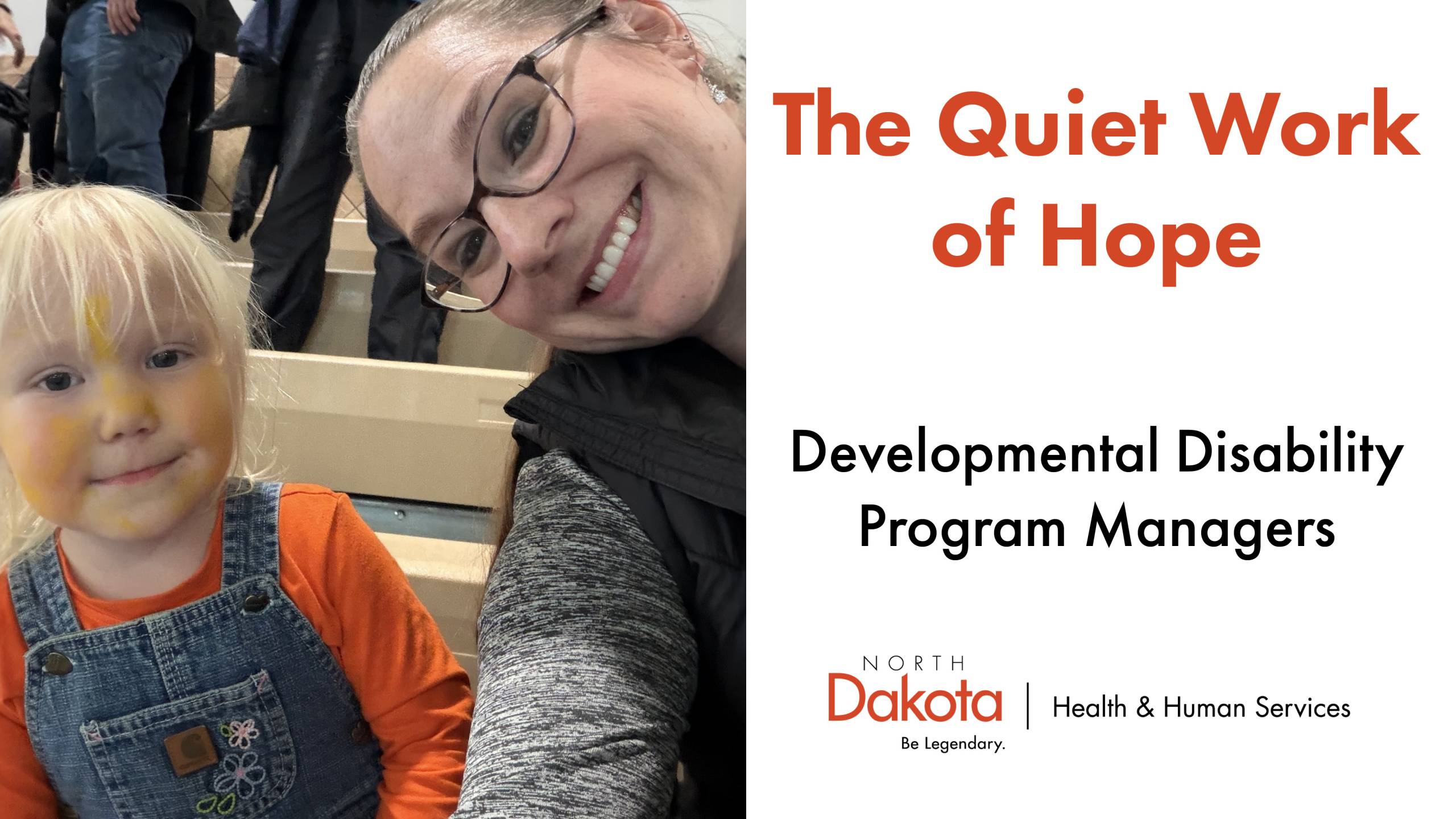
Every day across North Dakota, a group of dedicated professionals works quietly behind the scenes to ensure that individuals with developmental disabilities have the support they need to live meaningful, self-directed lives. These are our developmental disability program managers, and their work is both essential and deeply human.
Developmental disabilities program manager Sara Krebs spends her days supporting families of infants and toddlers entering Early Intervention. When she walks into a home or sits with a parent over a cup of coffee, she knows she may be meeting them in one of the most vulnerable moments of their lives. Many arrive overwhelmed, frightened or grieving the expectations they once held for their child. Sara remembers vividly what that feels like, because she’s lived it herself.
Years ago, as a young mother, she was told that something was wrong with her baby. She carries a first-hand understanding of the weight of hearing those words. Beyond that, the medical bills alone could have been crushing. Early Intervention services were the lifeline her family needed. Without them, she says, they would have been financially devastated.
That experience became the spark that led her into developmental disability services. Prior to that, she worked with older adults. “My kids opened the door,” she says. “They helped me realize I wanted to do this work.”
Today, when Sara enters a family’s life, she brings that history with her — quietly, compassionately, and without judgment. She tells families she is there to make sure they receive the services they need and want, and to ensure they feel empowered every step of the way. “Parents don’t choose this journey,” she says softly. “But they deserve compassion, support and a team that walks alongside them. Our job is to remind them they did nothing wrong. This may be temporary or lifelong, but either way, they’re not alone.”
In her time as a program manager, Sara has supported families through immense joy and unimaginable grief. She remembers one child on her caseload whose condition was terminal. When he passed away, his mother hugged Sara tightly and said, “Thank you for being you. You helped me get through this.” The words shook her. “When a child has a terminal diagnosis, you’re there for the family just as much as the child,” she says. “It never gets easier. But it’s an honor to be there.”
The work is emotional, but it is also practical and fast-moving. Sara drives thousands of miles a year across southwestern North Dakota, from Dickinson to Bowman to the Montana border. Some days she’s in a living room helping families navigate evaluations; other days she’s at a kitchen table going over Individualized Family Service Plans or sitting cross-legged on the floor while toddlers play or nestle shyly into their parents.
She prefers meeting in person whenever possible. “I want to read the room, see the kids, connect with families directly,” she says. “That personal interaction matters.” She asks direct questions: “Is this okay? Do you want to do this?” and pays attention not only to their words but to their body language. Some parents need reassurance, some need space and some need someone who listens without rushing them.
Over time, Sara has learned to balance warmth with boundaries. When she first started, she tried to fix everything for every family until she realized that wasn’t sustainable, nor was it empowering. “I can’t want it more than they do,” she says. Her job isn’t to speak for families; it’s to help them find their voice. Those moments when parents step into their own advocacy are the ones that stay with her.
Just the night before our conversation, a mother texted her after a medical appointment where she confidently advocated for her child. “Mama Bear had to come out,” the mother wrote. Sara smiled telling the story. “I told her I was proud of her,” she said. “That’s what this work is about.”
Sara speaks about her work with an unmistakable sense of purpose. “I love being the person who can show up for families through the scary moments, the joyful ones and everything in between,” she says. “It’s the greatest privilege.”
Across North Dakota, dozens of developmental disabilities program managers like Sara carry out this work every day - quietly, diligently and with extraordinary heart. Their presence strengthens families, communities and the futures of children across the state.
Though their work often happens behind the scenes, the impact is profound, lasting and deeply meaningful.