Health care providers are vital to the success of newborn screening programs. They are often the first point of contact for families to ensure that screenings happen promptly and accurately. From the initial screenings to explaining results and guiding parents through follow-up care, providers help bridge science and compassion. Their efforts can mean the difference between early treatment and a missed opportunity for intervention. When health care professionals are well-informed and proactive, babies have a much better chance of thriving from the very beginning.
General NBS Resources
- American Academy of Pediatrics Periodicity Schedule
Blood Spot Resources
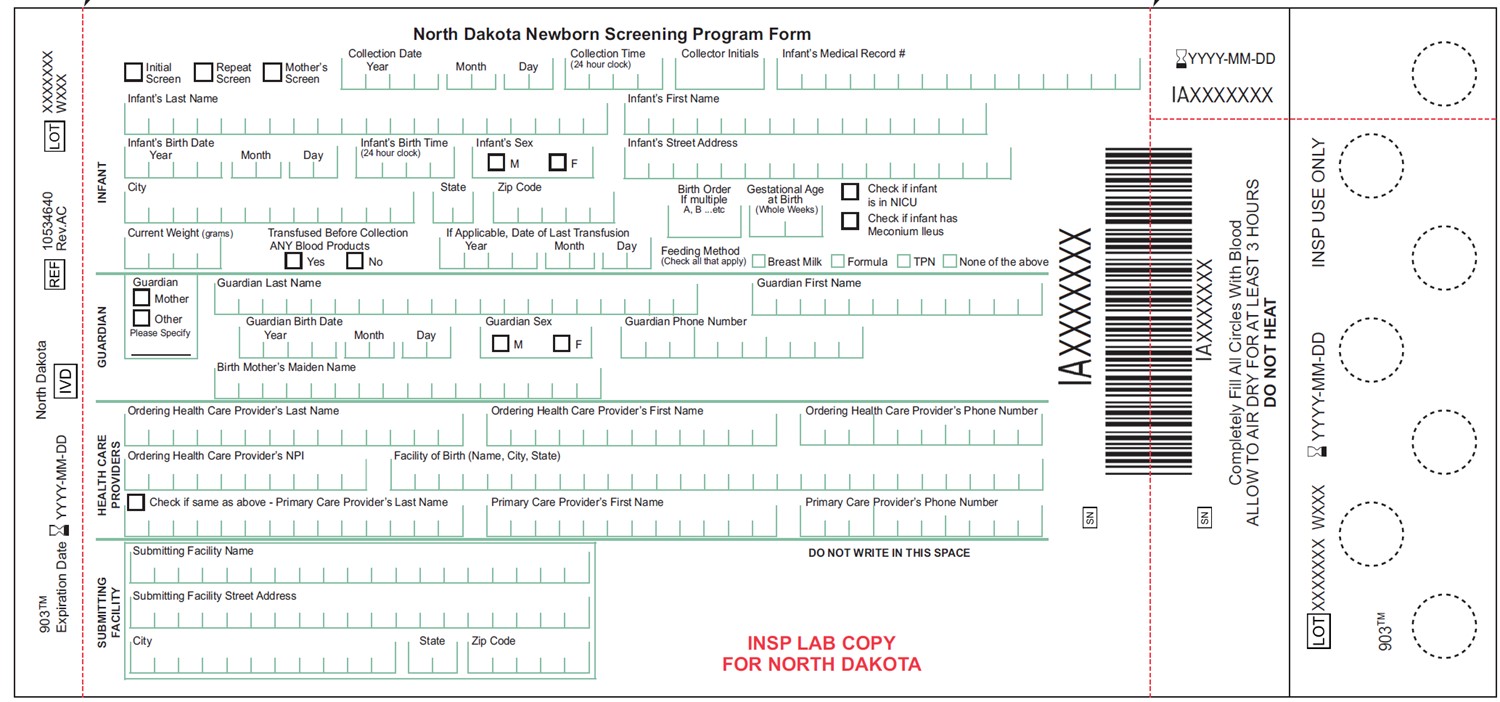
North Dakota's current newborn screening dried blood spot card.
Each birthing facility in ND has access to a daily courier service from Meadowlark Logistics.
CCHD Resources
Communicating Results to Patients
Quick Reference Card: Tips for Communicating Newborn Screening Results: A concise reference card featuring key communication principles, suggested language, common pitfalls to avoid, and a results disclosure checklist.
Pocket Guide for Communicating Newborn Screening Results: A step-by-step guide with practical phrases, conversation tips, and examples of language to avoid when discussing newborn screening results with families.
Guide to Communicating Out-of-Range Newborn Screening Results: Created by the Newborn Screening Information Center, this guide provides a more comprehensive view of best practices for communicating newborn screening results.
Understanding and Communicating Newborn Screening Results Toolkit: Created by Baby's First Test, this toolkit gives professionals resources that can be used when explaining what newborn screening results mean for families.
Newborn Blood Spot Results
- Open Elis Web Portal
- Open Elis Web Portal Tutorial
- Neonatal Screening Web Portal
- Newborn Screening Web Portal Tutorial
Newborn Hearing Results
Newborn Screening Family Stories
Hear from families whose lives were changed by newborn screening.
Watch their stories to learn how early detection can make a lifelong difference.