
Our commitment
We are taking bold, practical steps to improve the health and well-being of North Dakotans. Our goal is simple – healthier people, stronger communities and a rural health system built to last.


Funding Opportunities
Explore grants and other funding opportunities to help make North Dakota the healthiest state in the nation.
Why this matters
Working to make North Dakota the healthiest state in the nation
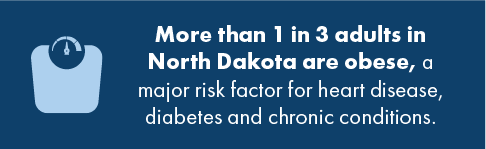
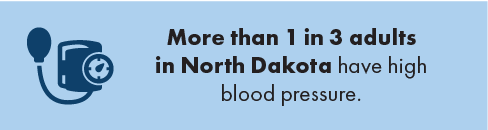
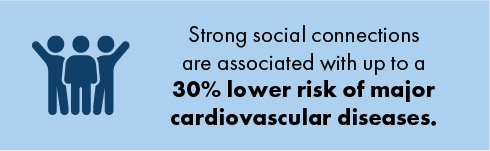
North Dakota faces rising rates of chronic disease, behavioral health challenges, and barriers to care—especially in rural communities. But the most powerful solutions are not out of reach. They are built into everyday choices: how we move, how we eat, and how we connect.
ND Lives Well Together is a statewide effort to make those choices easier, more accessible, and more supported—wherever you live, work, and raise a family.

What we’re working to achieve
Rebuild and retain a rural health workforce
- Increase rural provider retention
- Reduce health professional shortages
- Expand remote monitoring and AI-assisted care
Prevent chronic disease, restore health and reduce costs
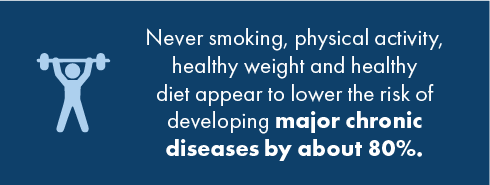
- Increase physical activity and reduce obesity
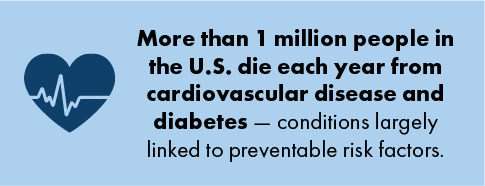
- Reduce chronic disease
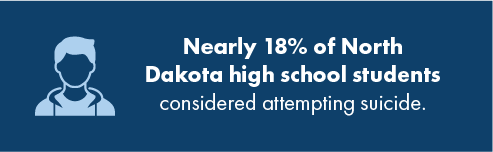
- Prevent depression, anxiety and suicide
Bring high-quality care closer to home
- Expand telehealth and remote monitoring use
- Increase access to preventive services and screenings
- Improve timeliness of care
Gain efficiency with modern technology and data
- Modernize and connect health data systems
- Increase transparency
- Create savings through shared infrastructure and cooperative purchasing
How North Dakota will use the funds
Strengthen and stabilize rural health workforce
- New rural residencies and training programs
- Grow-your-own workforce pipelines
- Recruitment and retention grants
- Training to help providers work at the top of their license
Make North Dakota healthy again
- Launch Eat Well ND and ND Moves Together
- Expand evidence-based nutrition, physical activity and behavioral health strategies
- Align care models and payment approaches to sustain long-term health improvements
Bring high-quality health care closer to home
- Expand telehealth hubs, mobile clinics and remote patient monitoring
- Reduce reliance on scarce physical workforce
- Improve care coordination and timeliness
- Support sustainability by diversifying revenue sources and right-sizing care delivery models
Connect technology, data and providers for a stronger ND
- Modernize health technology infrastructure
- Improve secure data sharing
- Support shared systems that reduce costs and improve care
Overview
Public Law 119-21, Section 71401 created a new Rural Health Transformation grants program administered by the Centers for Medicare and Medicaid Services (CMS), allocating $50 billion nationwide from federal fiscal years 2026 through 2030 — $10 billion annually. Funds will flow through states, which must submit a Rural Health Transformation Plan to CMS by Dec. 31, 2025, to access and manage these resources.
North Dakota is expected to receive $1 billion over five years to improve rural health care access, quality and sustainability.
What is the Rural Health Transformation Plan?
States must submit a one-time application to CMS, including a plan that outlines how the state will:
Improve access to hospitals, providers, and health care services for rural residents
Enhance health outcomes for rural communities
Use emerging technologies focused on prevention and chronic disease management
Strengthen partnerships between rural hospitals and providers to improve quality and financial stability
Support recruitment and training of rural health care clinicians
Prioritize data-driven solutions and technology to deliver high-quality care close to home
Address financial solvency and operating models of rural hospitals
Identify causes driving hospital closures, conversions, or service reductions
Eligible Activities
States must fund at least three or more designated activities.
Evidence-based prevention and chronic disease management interventions
Payments to providers for specified services
Consumer-facing technology solutions for chronic disease management
Training on advanced tech such as remote monitoring, AI, and robotics
Recruiting and retaining rural clinical workforce with service commitments
IT upgrades improving efficiency, cybersecurity, and outcomes
Helping communities optimize health care delivery systems
Expanding opioid use disorder, substance use, and mental health services
Innovative care models including value-based care and alternative payments
Other CMS-approved activities to ensure sustainable rural health care
North Dakota’s Outreach and Engagement
HHS is engaging with stakeholders to help shape North Dakota’s Rural Health Transformation Program. A month-long public survey was launched on Aug. 13, followed by three listening sessions scheduled in October to share survey results and gather more input. The state’s application must be submitted by Nov. 5, 2025, to the Centers for Medicare and Medicaid Services (CMS) with awards announced by Dec. 31, 2025. States will partner with CMS to ensure strong oversight and lasting impact.
Rural Health Transformation Program - Centers for Medicare and Medicaid Services
Rural Health Transformation Program grant opportunity - Grants.gov
Presentation to Interim Rural Health Transformation Committee - Oct. 21, 2025
Presentation to Interim Rural Health Transformation Committee - Oct. 14-15, 2025
Presentation on Rural Health Transformation Program to Budget Section - Sept. 24, 2025
North Dakota opens funding opportunity to improve care coordination for rural residents - Aug. 13, 2026
North Dakota launches funding opportunity to strengthen rural health care through electronic medical record enhancements - July 2, 2026
North Dakota opens wellness equipment funding opportunity for rural hospitals - June 30, 2026
North Dakota opens wellness equipment funding opportunity for rural and tribal schools - June 30, 2026
North Dakota launches funding opportunity to bring lifesaving breast cancer screenings closer to home - June 10, 2026
North Dakota launches $40 million grant opportunity to help rural hospitals expand lifesaving care close to home - May 29, 2026
North Dakota launches initiative focused on suicide prevention support and training for rural healthcare providers - May 15, 2026
Hunnicutt, national wellness leader, joins North Dakota's rural health transformation effort - May 1, 2026
Tribal Liaison and Rural Health Care Advisor, Join HHS Rural Health Transformation Program - April 27, 2026
North Dakota announces $3.6 million in school & community-based grant opportunities for Rural Health Transformation - April 22, 2026
HHS announces first Rural Health Transformation Program funding opportunity to strengthen rural health care workforce - March 18, 2026
Funding Opportunities
What is considered rural?
Answer: For Rural Health Transformation Program (RHTP) funding opportunities, the entities within and the cities of Grand Forks, Fargo, West Fargo and Bismarck are considered urban and do not qualify for RHTP funding opportunities unless the population served by the grant applicant is at least 50% ND rural citizens or the focus of the grant funding will be used for ND rural citizens. RHTP funding must be used to support ND rural citizens.
What funding opportunities will be released and what is the expected timeline for year one funding opportunities?
Answer: We encourage you to visit our website and sign up for RHTP updates to receive timely notifications as new opportunities and resources are released.
Who is eligible for funding opportunities?
Answer: At this stage, all funding opportunity details, including eligible providers, have not been finalized. We encourage you to visit our website and sign up for RHTP updates to receive timely notifications as new opportunities and resources are released.
Are correctional facilities eligible for RHTP funding?
Answer: Each funding opportunity will have varied requirements and interested organizations should review individual funding opportunity guidance to determine eligibility.
Will applications be more competitive if they focus on one specific action item or cross multiple initiatives?
Answer: Applications should be in line with the individual funding opportunity guidance. Eligible applicants may apply for more than one funding opportunity; there is no limit on the number of applications that can be submitted.
Is it better to apply as a single entity or community coalition?
Answer: There is no advantage to apply as a single entity or community coalition. The application will be evaluated based on the evaluation criteria and scored appropriately.
Will we have to reapply annually for RHTP funds?
Answer: A subrecipient and contractor may not need to reapply annually if the grant award is a multi-year award. The subrecipient and contractor are only guaranteed funding based on the authorized amount awarded to the state for the current budget year. The subrecipient and contractor will need to enter into an amendment for each budget year.
What will the application processes look like?
Answer: The application process for funding opportunities will involve submitting a project application and budget details spreadsheet. Each application will have varied requirements and interested organizations should review individual funding opportunity announcements for application guidance.
Do subrecipients and contractors have to maintain current information in SAM.gov?
Answer: Yes, subrecipients and contractors are required to register and maintain current information in SAM.gov at all times and update the information at least once a year for the SAM registration to remain active.
Can IHS facilities be subawardees of, or contractors with, RHTP funds?
Answer: Tribally operated IHS facilities may be subawardees of RHTP funds, but federally operated IHS facilities may not.
Do provider organizations eligible for RHTP funding need to be located in rural areas?
Answer: For RHTP funding opportunities, the entities within and the cities of Grand Forks, Fargo, West Fargo and Bismarck are considered urban and do not qualify for RHTP funding opportunities unless the population served by the grant applicant is at least 50% ND rural citizens or the focus of the grant funding will be used for ND rural citizens. RHTP funding must be used to support ND rural citizens.
Can HHS award RHTP funds to other state entities?
Answer: Yes, depending on the grant funding opportunity, RHTP funds can be awarded to another state entity.
Are non-clinical systems allowed to apply if they directly support rural health transformation goals, such as referral and cross-program coordination systems, workforce and participant tracking, structured reporting tools for evaluation and long-term fund sustainability and home visiting program coordination platforms?
Answer: Yes, non-clinical applicants are allowed, if they are in line with funding opportunity guidance and RHTP goals.
Outreach
Can someone from HHS join our webinar/meeting to talk about RHTP?
Answer: We appreciate your interest in the Rural Health Transformation Program! While we would like to meet with every group, our team is focused on attending community meetings sponsored by state lawmakers. We encourage all constituents to attend a meeting in their area. The details of upcoming meetings can be found on the RHTP webpage.
We are a company that can help with RHTP. Can we meet with someone to share our product/service?
Answer: Please email your product information to rhtp@nd.gov. Your information will be added to a list of interested vendor and project leads may reach out for additional information, if needed. Additionally, sign up for email updates to receive notices of all posted funding opportunities.
I am from North Dakota and can provide subject matter expertise. How can I get involved?
Answer: Please email your product information to rhtp@nd.gov. Your information will be added to a list of interested vendors and project leads may reach out for additional information, if needed. Additionally, sign up for email updates to receive notices of all posted funding opportunities.
Is North Dakota placing a specific emphasis or priority on tribal communities within this grant program?
Answer: North Dakota has hired a liaison to support tribal communities with RHTP.
I’d like to host a RHTP community meeting in my area. How can I do that?
Answer: We appreciate your interest in the Rural Health Transformation Program! While we would love to meet with every group, our team is focused on attending community meetings sponsored by state lawmakers. We encourage members of your group to attend a meeting in their area. The details of upcoming meetings can be found on the RHTP webpage.
How can we support our community or local providers to receive RHTP funds?
Answer: You can support your community or local providers in receiving RHTP funds by assisting with application writing, convening community meetings and subscribing to receive email updates to increase awareness of funding opportunities.
Posted: April 29, 2026
Data Sources: Centers for Disease Control and Prevention, Trust for America's Health, National Heath, Lung and Blood Institute, 2023 Youth Risk Behavior Survey, National Institutes of Health (Pub Med Central) and EPIC Potsdam Study.
The Rural Health Transformation Program is supported by Centers for Medicare & Medicaid Services (CMS) of the U.S. Department of Health and Human Services (US HHS) as part of a financial assistance award totaling $198,936,969.55 with 100 percent funded by CMS/US HHS. The contents are those of North Dakota Department of Health and Human Services (ND HHS) and do not necessarily represent the official views of, nor an endorsement, by CMS/US HHS, or the U.S. Government. Stevens Amendment.